
A speedball is a drug combination that pairs a stimulant — most commonly cocaine or methamphetamine — with an opioid such as heroin or fentanyl. The two substances work in direct opposition to each other inside the body, creating a dangerous physiological conflict that dramatically increases the risk of overdose and death.
Most people encounter the term in a news story or a true crime documentary, usually attached to a tragedy. But for families and individuals dealing with active addiction in 2026, the question isn’t academic. If someone you love is using a combination of drugs — injecting, snorting, or smoking a mix — understanding what a speedball is and why it’s so uniquely deadly could be the most important thing you read today.
Joint Commission accredited and family-owned since 1987, Turning Point of Tampa has treated the full spectrum of drug addiction — including polysubstance use involving opioids and stimulants — from our Tampa campus for nearly four decades. Our clinical team works with individuals whose substance use has escalated far beyond a single drug, addressing the layered physical and psychological reality of polysubstance dependence with highly structured, evidence-based care.
Why People Use Speedballs

What draws someone to combining two drugs that work against each other? The answer lies in the subjective experience — at least at first.
Stimulants like cocaine produce intense euphoria, energy, and a racing sense of confidence. Opioids like heroin produce sedation, warmth, and a profound sense of relief from physical or emotional pain. When used together, the stimulant blunts the sedation of the opioid, and the opioid softens the harsh edge of the stimulant crash. The result is a high that feels more balanced — though “balanced” is a dangerous illusion.
That illusion has a cost. A steep one.
Here’s what many users don’t realize: because the stimulant masks the opioid’s sedating effects, people often take far more of the opioid than they would on their own. The body’s warning signals — drowsiness, slowed breathing, loss of consciousness — get overridden. You can cross a lethal threshold without feeling like you’re in danger.
The Physical Danger: What’s Actually Happening in the Body
Can two drugs cancel each other out? Not in a safe way.
When a stimulant and an opioid enter the body simultaneously, they don’t neutralize each other — they compete. The heart is forced to respond to two conflicting commands at once.
| Body System | Stimulant Effect | Opioid Effect | Combined Risk |
|---|---|---|---|
| Heart Rate | Increases sharply | Slows | Irregular heartbeat, cardiac arrest |
| Blood Pressure | Elevates | Decreases | Dangerous fluctuations |
| Breathing | May increase rate | Slows, depresses | Respiratory failure |
| Brain | Dopamine surge, alertness | Sedation, pain relief | Overwhelming neurological stress |
| Body Temperature | Rises | Decreases | Unstable thermoregulation |
The takeaway here is sobering: no system in the body is spared. The heart and lungs bear the most immediate risk, but the neurological strain of opposing signals is significant as well. When the stimulant begins to wear off before the opioid — which is common, since cocaine’s effects are short-lived — the full depressant weight of the opioid hits all at once. That’s the window when respiratory arrest and death most often occur.
This isn’t a theoretical risk. Several high-profile deaths throughout the last few decades have been directly attributed to speedball use, which is part of why the term has entered broader public awareness.
Speedballing and the Fentanyl Era
The landscape of polysubstance use has shifted significantly in recent years, and not for the better.
When most people think of a speedball, they picture cocaine and heroin — the classic combination. But in 2026, heroin has largely been displaced by fentanyl in the illicit drug supply. Fentanyl is roughly 50 to 100 times more potent than morphine. When it replaces heroin in a speedball combination, the margin for error essentially disappears.
What’s made this even more dangerous is contamination. Many people using cocaine or methamphetamine don’t know their supply contains fentanyl. They aren’t intentionally using a speedball — they’re unknowingly using one. Fentanyl has been detected in stimulant supplies across Florida and nationally at alarming rates. The result is accidental polysubstance exposure in people who believe they’re using a single drug.
If someone you care about is using any illicit substance, this is worth understanding. The drug supply is not what it was even five years ago.
Client Spotlight
Kim had been using cocaine on weekends for years — she thought she had it managed. When she started mixing it with pills she’d buy from a friend to “come down easier,” she didn’t think of herself as someone with a serious problem. It wasn’t until she woke up on her bathroom floor with no memory of the previous six hours that the reality landed. Her sister called Turning Point of Tampa that same morning. Kim spent time in our residential program, where the clinical team helped her understand — for the first time — how the two substances had been working together against her, and what that had been doing to her heart. “I genuinely didn’t think I was the kind of person this happened to,” she said later. She’s been in recovery for almost two years.
Signs That Someone May Be Speedballing
You don’t always know what someone is using. But certain patterns can signal polysubstance use involving a stimulant-opioid combination.
Watch for these behavioral and physical signs:
- Erratic mood swings — racing energy followed by sudden, heavy sedation
- Pinpoint pupils alternating with dilated pupils at different points in the day
- Signs of stimulant use (agitation, rapid speech, elevated heart rate, decreased appetite)
- Signs of opioid use (nodding off, slurred speech, constricted breathing)
- Using nasal sprays frequently (a sign of snorting)
- Track marks or bruising on the arms
- Extreme secrecy around drug use, more than usual
- Chest pain, racing heartbeat, or complaints of heart palpitations
- Increasing financial problems or disappearing for unexplained stretches of time
None of these signs alone confirms speedball use. But if you’re seeing a cluster of stimulant and opioid symptoms in the same person, polysubstance use deserves serious consideration.
Polysubstance Addiction: Why It’s Harder to Treat
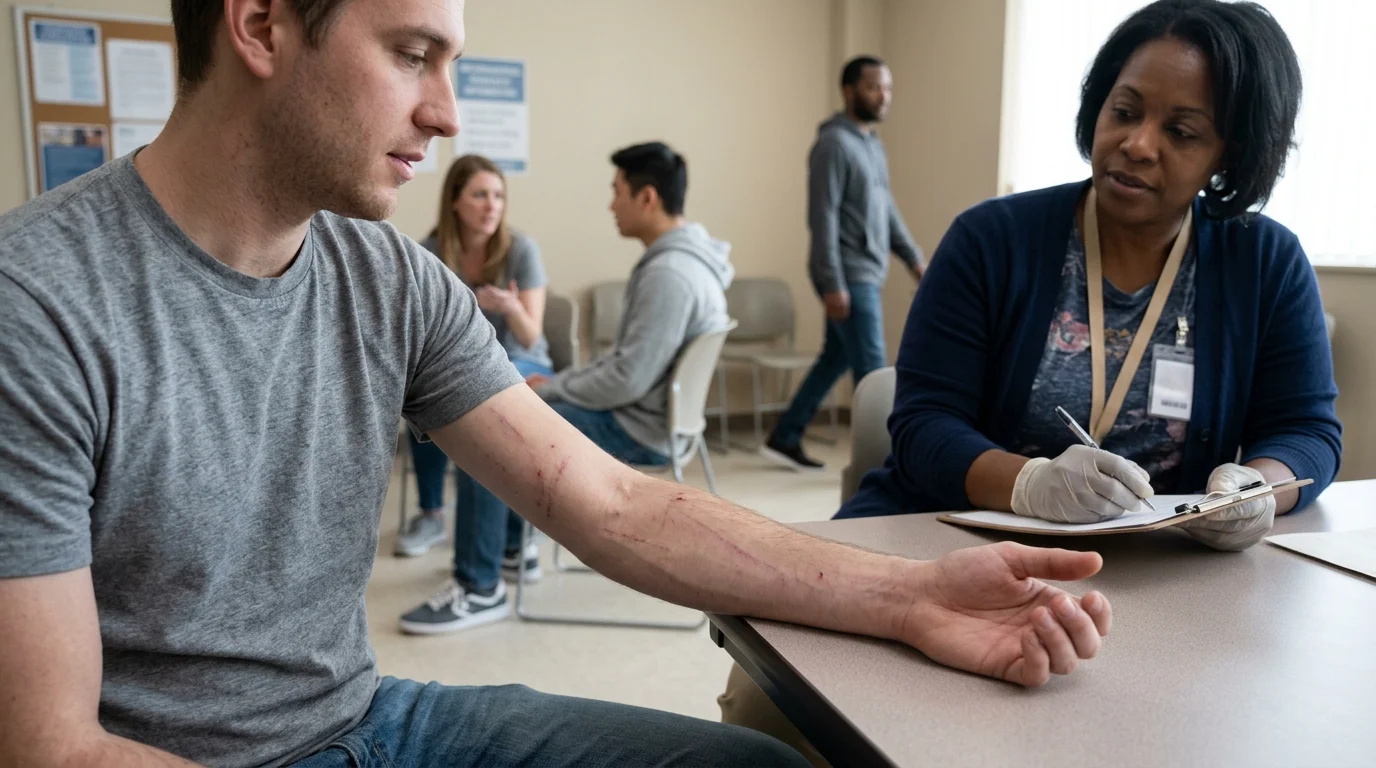
Treating addiction to one substance is hard. Treating addiction to two that work in opposing directions is harder.
When someone becomes physically and psychologically dependent on both a stimulant and an opioid, the withdrawal experience involves two separate — and sometimes conflicting — processes. Opioid withdrawal is physically intense and potentially dangerous, requiring medical management. Stimulant withdrawal is less medically acute but produces profound psychological symptoms: depression, exhaustion, intense cravings, and in some cases suicidal ideation.
Managing both simultaneously requires a level of clinical care that not every treatment setting can provide. Medical detox with around-the-clock monitoring is often the necessary starting point, not an optional add-on.
Client Spotlight
Jerome had tried to get clean three times before he came to Turning Point of Tampa. Each time, he’d managed one part of the problem but not the other — he’d stop the heroin and still use cocaine, or vice versa. It never held. When he entered our residential program, it was the first time a clinical team had addressed both at the same time as part of a coordinated plan. The dual focus on withdrawal management and the underlying mental health issues driving his use changed the outcome. “I kept thinking I could outrun half of it,” he said months later. “They helped me understand it was never two separate problems.”
What Treatment for Speedball Addiction Looks Like
Where does someone even start when they’re dependent on two drugs at once?
The honest answer is: with medical supervision. Attempting to stop both substances without clinical support is dangerous. Opioid withdrawal alone carries real medical risks — and when complicated by stimulant dependence, professional oversight is essential.
At Turning Point of Tampa, the path through polysubstance addiction generally follows a structured progression:
- Medical detox — Around-the-clock monitoring from licensed clinical staff to manage withdrawal safely, address medical complications, and stabilize the individual before deeper therapeutic work begins.
- Residential treatment — Highly structured inpatient programming that addresses both the physical and psychological dimensions of addiction. Group counseling is the keystone of this work, because hearing others’ experiences breaks through denial in ways that individual sessions sometimes can’t.
- Partial hospitalization — A step down from residential that maintains intensive clinical support while beginning the transition back to daily life.
- Intensive outpatient — Continued group and individual therapy while living in the community or in a recovery residence.
- Aftercare and ongoing support — Free weekly aftercare groups, available for as long as you need them.
Dual diagnosis treatment is often essential in polysubstance cases. Depression, anxiety, PTSD, and trauma frequently drive the use — not just cause it. Treating the addiction without addressing what’s underneath it is how people end up back at the starting line.
How Turning Point of Tampa Approaches Polysubstance Care
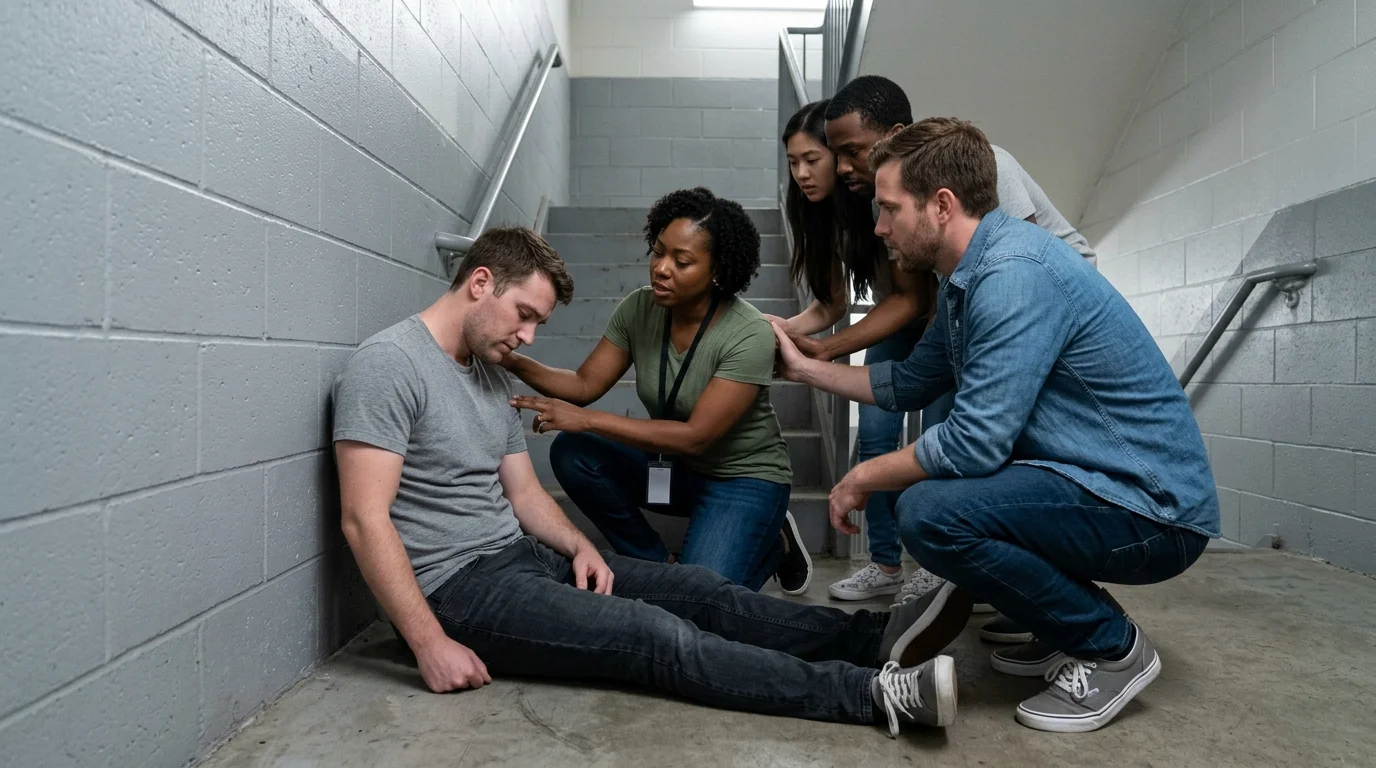
What makes a treatment program genuinely equipped to handle the complexity of speedball addiction?
The short answer is depth — clinical depth, program depth, and time.
Named by Newsweek as one of America’s Best Addiction Treatment Centers, Turning Point of Tampa has spent nearly four decades building a program designed to meet people where the addiction actually is, not where it’s convenient to treat. We’re one of the few facilities in Florida licensed for residential treatment, with ASAM-certified withdrawal management on site. Our clinical team includes board-certified addiction medicine specialists who understand the physiological complexity of opioid and stimulant dependence — how they interact, how they compete, and what the body needs to stabilize safely.
We also treat co-occurring mental health conditions as part of the same integrated process — not as a separate referral. Because for most people with polysubstance addiction, the mental health piece isn’t a footnote. It’s the foundation.
Our 12-Step philosophy runs through every level of programming, not as a rule to follow but as a daily framework to carry out the door. Structure saves lives. We believe that — and nearly four decades of results back it up.
Supporting Articles
- Everything You Need to Know About Opioid Detox — A detailed look at what opioid withdrawal involves, what medical management looks like, and what to expect during the detox process — essential reading for anyone concerned about opioid dependence as part of polysubstance use.
- Fentanyl and Benzodiazepines — Explores another dangerous drug combination involving the opioid fentanyl, and why mixing central nervous system substances dramatically raises overdose risk.
- Mental Health and Dual Diagnosis Treatment in Tampa — Covers how co-occurring mental health conditions are addressed alongside addiction — particularly relevant for polysubstance users whose use is driven by untreated depression, anxiety, or trauma.
- Detox Centers in Tampa — A guide to what to look for in a medically supervised detox program and how to evaluate your options in the Tampa area.
- How to Choose the Best Drug Rehab Near Me — Practical guidance on evaluating treatment programs for complexity of care, accreditation, and approach — useful when the addiction involves more than one substance.
Frequently Asked Questions
A speedball is a drug combination that pairs a stimulant — typically cocaine or methamphetamine — with an opioid such as heroin or fentanyl. The two substances work in physiological opposition, creating severe stress on the heart, lungs, and brain. The combination significantly increases the risk of cardiac arrest, respiratory failure, and overdose death compared to either drug alone.
The stimulant masks the sedating effects of the opioid, causing people to consume far more of the opioid than they otherwise would. When the stimulant wears off — often quickly — the full weight of the opioid hits the system at once, which is when respiratory failure is most likely. The heart also faces conflicting demands simultaneously, dramatically raising the risk of cardiac arrest.
Yes, and it’s increasingly common. Fentanyl contamination of the illicit drug supply — including cocaine and methamphetamine — means many people are unknowingly using opioids alongside stimulants. Someone who believes they’re using only one drug may actually be exposing themselves to a stimulant-opioid combination without knowing it.
Look for alternating signs of stimulant use (agitation, rapid speech, elevated energy, dilated pupils) and opioid use (sedation, nodding off, slurred speech, constricted pupils) in the same person, sometimes within the same day. Chest pain, heart palpitations, and extreme mood swings that cycle between racing energy and sudden crashes can also signal polysubstance use.
Generally, yes. Polysubstance dependence involves two separate — and often competing — withdrawal processes. Opioid withdrawal requires careful medical management, while stimulant withdrawal produces intense psychological symptoms including depression and cravings. Treating both simultaneously requires a clinical team with experience in complex, co-occurring addiction, and ideally a program with on-site medical detox capabilities.
Most individuals need medically monitored detox as the starting point, followed by structured residential or intensive outpatient programming that addresses both substances and any underlying mental health conditions. Treatment that addresses only one substance or ignores co-occurring conditions significantly increases the risk of relapse.
Turning Point of Tampa accepts admissions 24 hours a day, seven days a week. We work with most major insurance plans and we’re committed to helping families find a path forward — including verifying benefits before admission. Don’t wait to reach out. The sooner care begins, the better the outcome.