
Yes, diphenhydramine — the active ingredient in Benadryl — can produce psychoactive effects at doses far above the recommended amount, but what people experience isn’t a high in any pleasurable sense. At toxic levels, it causes delirium, terrifying hallucinations, and life-threatening physical complications.
Most people think of Benadryl as the allergy tablet buried in a bathroom cabinet. It’s sold everywhere, it’s cheap, and it seems harmless. So when the question “can Benadryl get you high?” shows up in a search bar, it’s often because someone has heard something alarming — about a teenager, a social media trend, or a loved one who’s been taking far too much of an over-the-counter medication that was never supposed to be dangerous.
At Turning Point of Tampa, our physicians and addiction specialists have seen firsthand what happens when over-the-counter medications become part of a misuse pattern. As a state-licensed, family-owned treatment facility founded in 1987, we treat substance use disorders — including those involving substances that most people wouldn’t think of as “drugs.” Our ASAM-certified programs cover the full continuum of care, from withdrawal management through residential treatment and outpatient support, all on our single Tampa campus. When a medication as common as Benadryl enters the picture, we want you to have accurate, honest information.
What Diphenhydramine Does at High Doses

Diphenhydramine is an anticholinergic antihistamine. At the recommended dose — typically 25 to 50 mg — it blocks histamine receptors, relieving allergy symptoms and causing drowsiness. That sedating effect is predictable and, for most people, mild.
What changes at high doses? Everything.
When someone takes significantly more than the recommended amount (often described in misuse contexts as 300 mg or more), diphenhydramine begins blocking acetylcholine receptors throughout the body and brain. This is the mechanism behind the so-called “Benadryl high.” But the effects aren’t euphoric. They’re disorienting — and they escalate quickly into something genuinely frightening.
At high doses, diphenhydramine can produce:
- Extreme sedation and confusion
- Agitation and restlessness
- Rapid or irregular heartbeat
- Dry mouth, flushing, and urinary retention
- Blurred vision
- Disorientation and memory loss
- Psychosis-like symptoms that feel nothing like being “high”
The sedation some people seek is real. The danger attached to reaching it is also real. There’s no reliable dosage threshold between “sedated” and “toxic.” That margin shifts based on body weight, age, other medications, and individual physiology.
Benadryl “Trips” — This Is Anticholinergic Poisoning, Not a Psychedelic Experience
A so-called Benadryl trip isn’t a psychedelic experience. It’s anticholinergic toxidrome — a medical emergency with a formal clinical name.
Tripping on Benadryl doesn’t produce the expansive, insight-driven states associated with true psychedelics. What people actually experience is delirium: fragmented, terrifying, and impossible to control. Poison Control centers and emergency departments describe it consistently as one of the most distressing acute toxic states a person can go through.
The hallucinations are not visual patterns or altered perceptions. They’re indistinguishable from reality — which is what makes them so dangerous. People have walked into traffic, fallen from heights, or become violent because they genuinely couldn’t tell what was real during a diphenhydramine delirium episode. The experience often includes:
- Visual and auditory hallucinations that feel completely real
- Conversations with people who aren’t there
- Inability to recognize familiar people or places
- Severe paranoia and panic
- Complete gaps in memory afterward
People who survive a Benadryl trip often describe it as the worst experience of their lives. Social media posts depicting these episodes as recreational aren’t showing the full picture. Calling it a “trip” normalizes something that is, clinically, poisoning.
This is a 911 situation. If someone you know is showing signs of anticholinergic toxicity after taking diphenhydramine, call emergency services immediately. Don’t wait to see if it passes.
Can Benadryl Kill You?
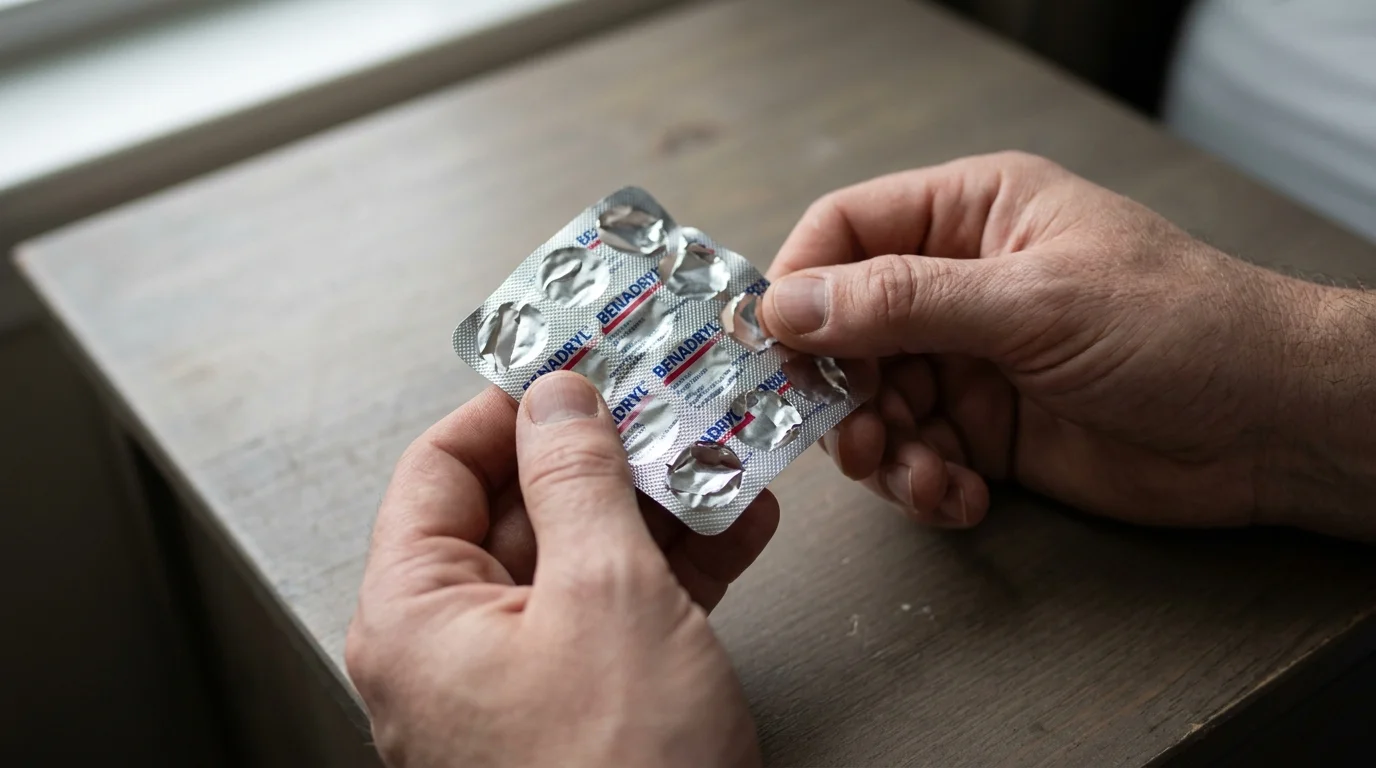
Yes. Benadryl can be fatal, and the line between a toxic dose and a lethal one is narrower than most people realize.
Diphenhydramine overdose causes death primarily through cardiac arrhythmia (dangerously irregular heart rhythm) and seizures. The drug prolongs the QT interval — a measure of electrical activity in the heart — which can trigger ventricular fibrillation. It doesn’t require an enormous overdose. Cases of fatal diphenhydramine toxicity have been documented in adults who took amounts some might consider “just a lot.”
Signs that require immediate emergency care include:
- Seizures or convulsions
- Irregular or racing heartbeat
- Loss of consciousness or unresponsiveness
- Severe confusion with agitation
- Difficulty breathing
- Body temperature above 103°F
Don’t call a friend. Don’t wait. Diphenhydramine toxicity can deteriorate rapidly, and cardiac events can occur without warning. If you’re reading this because you’re worried about someone right now, call 911.
Is Benadryl Addictive?
Benadryl can become habit-forming, and the pathway to dependence is often gradual and unintentional.
Diphenhydramine doesn’t produce addiction in the same way opioids or stimulants do. There’s no dramatic euphoric reward loop driving compulsive use. But physical dependence and psychological reliance do develop — particularly in people who use it nightly as a sleep aid.
Here’s what that pattern tends to look like:
- Someone takes Benadryl for allergies or occasional sleeplessness.
- They notice it helps them fall asleep quickly and reach for it again.
- Over weeks or months, the body develops tolerance — the same dose produces less sedation.
- They take more to achieve the same effect.
- On nights without it, sleep becomes difficult or impossible.
- The medication is no longer optional. It’s a requirement.
That’s physical dependence. You might not think of it as addiction, but your body does.
Psychological reliance is equally common. People who struggle with anxiety, insomnia, or intrusive thoughts find that the sedating blur of diphenhydramine quiets mental noise in a way nothing else seems to. The relief is real — which is exactly what makes stopping hard.
Is Benadryl addictive in the clinical sense? The research is mixed on formal addiction criteria, but dependence — the state where stopping causes disrupted sleep, anxiety, and irritability — is well documented. For people with a history of substance use disorders, the risk of escalation is meaningfully higher.
Client Spotlight
Patricia had been taking Benadryl every night for almost three years when she came to Turning Point of Tampa. It had started the year she went through her divorce — just something to help her sleep through the grief. By the time she sought help, she was taking four or five tablets a night and spending her mornings in a fog she’d started calling “normal.” What surprised her most wasn’t the withdrawal process. It was learning she wasn’t the only one. In her residential treatment group, she discovered that quiet, over-the-counter dependence was far more common than anyone talked about — and that treating the grief and anxiety underneath the sleeplessness changed everything.
What Benadryl Misuse Actually Looks Like
Benadryl abuse doesn’t always look like what people picture when they imagine drug misuse. It’s rarely dramatic at first.
So what does it actually look like day to day? Often, it looks like someone who’s just tired all the time, or someone whose medicine cabinet is stocked with allergy tablets they don’t actually have allergies for.
Common patterns of misuse include:
- Taking diphenhydramine nightly as the only sleep strategy
- Using it to blunt anxiety or emotional distress
- Taking higher doses to recreate the sedation that used to come from lower ones
- Combining it with alcohol, opioids, or other CNS depressants to amplify the effect (a combination that significantly increases overdose risk)
- Young adults following online “challenges” involving large doses
Who’s most at risk? Several groups face elevated vulnerability:
| Population | Why the Risk Is Higher |
|---|---|
| Adolescents and young adults | Social media exposure; lower tolerance; less awareness of toxicity |
| People with insomnia | Gradual escalation from occasional to nightly to dependent use |
| Those in early recovery from other substances | Seeking any available relief; cross-addiction risk |
| Older adults | Slower metabolism; anticholinergic sensitivity increases with age |
| People managing untreated anxiety or depression | Using sedation to manage emotional distress |
The key takeaway: misuse isn’t always intentional. Dependence often begins in the medicine cabinet with something bought at a grocery store.
Client Spotlight
When Damon’s family called us, they weren’t sure what they were dealing with. Their 19-year-old had started acting strangely — sleeping most of the day, disconnected, confused at times. They thought it might be depression or drugs. It was both, in a way. He’d been taking large amounts of diphenhydramine regularly, partially from curiosity and partially because it was the only thing that turned off the anxiety that had been building since high school. His dual diagnosis assessment revealed an anxiety disorder that had never been treated. Addressing both — the substance use pattern and the underlying condition — is exactly the kind of integrated work our programs are built for.
When Does Benadryl Wear Off?

Benadryl’s effects typically begin within 30 minutes, peak between one and three hours after taking it, and wear off within four to six hours for most adults — but the drug stays in your system considerably longer than that.
Here’s the distinction that matters: “worn off” and “out of your system” aren’t the same thing.
| Phase | Timeframe |
|---|---|
| Onset of effects | 15–30 minutes after ingestion |
| Peak effects | 1–3 hours |
| Duration of noticeable effects | 4–6 hours |
| Half-life (time to reduce by 50%) | 8–9 hours |
| Full clearance from system | 24–48 hours |
Why does this gap matter? Because residual diphenhydramine can impair driving, reaction time, and judgment long after you feel “back to normal.” Studies have found cognitive impairment persisting the morning after a nighttime dose — even when people felt fine. This is especially relevant for anyone using Benadryl regularly as a sleep aid who then drives to work.
For people taking it repeatedly or at high doses, clearance takes longer. Age slows the process too. Older adults metabolize diphenhydramine more slowly, which is why it’s generally flagged as a medication to avoid in people over 65.
How Turning Point of Tampa Approaches Over-the-Counter Substance Use
Benadryl dependence isn’t treated the same way as alcohol or opioid use disorder — but it belongs in the same conversation.
What do we mean by that? Substance use disorders don’t discriminate by drug category. Our clinical team treats the full picture: the substance, the pattern of use, and the underlying conditions — anxiety, insomnia, grief, trauma, depression — that drove someone toward a medication in the first place.
At Turning Point of Tampa, our programs are built on the belief that lasting recovery requires more than stopping a substance. It requires understanding why the substance felt necessary. That’s why group counseling is the keystone of what we offer — not a supplement, but the core. And it’s why our dual diagnosis approach matters so much for cases involving over-the-counter medications. People often arrive having used something like diphenhydramine to manage an untreated mental health condition they didn’t know they had.
Our programming is highly structured because structure — real, consistent, daily structure — is what allows recovery to take root. From ASAM Level 3.7 withdrawal management through residential, day treatment, and outpatient levels of care, every transition happens on the same campus with the same team. There are no handoffs to unfamiliar providers mid-recovery.
And when formal treatment ends, support doesn’t. Free, therapist-facilitated aftercare groups are available as long as you need them. Not for 90 days. Not until insurance runs out. For as long as recovery requires.
Supporting Articles
- Detox Centers in Tampa — Covers what to expect from medically supervised withdrawal management and how to find appropriate care in the Tampa area, including what separates a clinically sound detox from an inadequate one.
- Drug Rehab Centers in Tampa — An overview of treatment options available in Tampa, helping you understand the levels of care and what to look for when selecting a program.
- Mental Health and Dual Diagnosis Treatment in Tampa — Explains how co-occurring mental health conditions like anxiety and depression are treated alongside substance use disorders — directly relevant to Benadryl dependence patterns.
- Compulsive Behavior Disorders — Explores how compulsive patterns develop around substances and behaviors, including the gradual escalation that often characterizes over-the-counter drug misuse.
- What Helps with Alcohol Withdrawal — While focused on alcohol, this article addresses how medically supervised withdrawal management works and why professional support matters when stopping any substance.
Frequently Asked Questions
No. At the recommended dose of 25 to 50 mg, diphenhydramine produces mild sedation and antihistamine effects — not intoxication. The psychoactive effects associated with misuse only appear at doses significantly above what’s on the label, and those doses carry serious medical risks.
They’re fundamentally different experiences. Psychedelics like psilocybin or LSD alter perception in ways users are generally aware of. A Benadryl “trip” is anticholinergic delirium — hallucinations that feel completely real, severe confusion, agitation, and memory loss. People in this state often can’t distinguish the experience from reality, which makes it medically dangerous, not recreational.
Yes. Nightly use of diphenhydramine — even at recommended doses — can lead to tolerance and dependence over weeks to months. Your body adapts, requiring more of the drug to achieve the same sedation, and sleep becomes difficult without it. If you’ve been relying on Benadryl to fall asleep consistently, it’s worth discussing with a healthcare provider.
Call 911 immediately if the person is having a seizure, losing consciousness, showing signs of cardiac distress, or is severely confused and agitated. Don’t try to manage it at home. Anticholinergic toxicity from diphenhydramine can escalate rapidly, and emergency medical treatment — including cardiac monitoring and supportive care — may be required.
The distinction between habit and addiction isn’t always as clear as people imagine. If someone is taking more Benadryl than intended, can’t comfortably stop, and is using it to manage emotional distress rather than treat a medical symptom, those are signs worth taking seriously. Dependence on over-the-counter medications — particularly in people with underlying anxiety, depression, or trauma — often warrants professional evaluation.
Significantly so. Combining diphenhydramine with alcohol, opioids, benzodiazepines, or other central nervous system depressants multiplies the sedation effect and raises overdose risk substantially. Cardiac complications are also more likely when diphenhydramine is used alongside other medications that affect heart rhythm.
If you or someone you care about is taking diphenhydramine daily, using it to cope with anxiety or emotional pain, increasing the dose to get the same effect, or can’t sleep without it — these are signals that professional support could help. You don’t have to be in crisis for treatment to be appropriate. Reaching out early makes recovery easier.