
You’ve seen it at gas stations, smoke shops, and even some convenience store checkout counters, sold in small bottles and powder packets with names that sound more like energy drinks than drugs. Kratom has slipped into American life quietly, marketed as a natural supplement, but the people who end up detoxing from it tell a different story. So what is kratom, really, and why does something sold legally in most states lead people into withdrawal that looks a lot like opioid withdrawal?
Kratom is a plant-based substance derived from the leaves of Mitragyna speciosa, a tree native to Southeast Asia, and its active compounds bind to opioid receptors in the brain. That means although it’s often sold as an herbal supplement, kratom acts pharmacologically like an opioid, and regular use can lead to real physical dependence.
At Turning Point of Tampa, our clinical team has watched kratom use climb steadily among clients who initially turned to it for pain relief, energy, or as a way to self-manage opioid withdrawal, only to find themselves dependent on it instead. We’re a family-owned facility that has provided addiction treatment from our Tampa campus since 1987, and our continuum of care includes medically monitored detox, residential treatment, and outpatient programs that address kratom use alongside any other substance involved. Our medical staff are trained to recognize kratom dependence as a real, treatable condition.
What Is Kratom?
Kratom comes from the leaves of a tropical evergreen tree grown primarily in Thailand, Indonesia, Malaysia, and Myanmar. For generations, laborers in those regions chewed the leaves for energy or brewed them into tea. In the U.S., kratom shows up differently: as capsules, powders, extracts, and drink shots sold under brand names that give little indication of what’s actually inside.
Whether this is really just a tea leaf or something stronger depends entirely on the dose and the person.
What Is Kratom Made Of?

Kratom leaves contain more than 40 active compounds, but two matter most clinically: mitragynine and 7-hydroxymitragynine (7-OH). Mitragynine makes up the bulk of kratom’s effects at typical doses, while 7-OH is present in smaller amounts in the raw plant but is far more potent at the opioid receptor level. Some commercial kratom products concentrate or add extra 7-OH, which changes the risk profile considerably.
What Is Kratom Used For?
People reach for kratom for a range of reasons, and understanding why someone started often matters as much as what they’re using now:
- Pain management: Many turn to kratom believing it’s a gentler alternative to prescription painkillers.
- Energy and focus: At low doses, kratom acts as a stimulant, similar to how caffeine works.
- Mood support: Some use it to self-treat anxiety or low mood.
- Opioid withdrawal management: A sizable number of people use kratom specifically to avoid withdrawal from heroin or prescription opioids, without medical guidance.
Each of these uses carries risk. Using a substance that acts on opioid receptors to solve a mood or pain problem, without medical supervision, tends to create a new problem rather than solve the old one.
Is Kratom an Opioid?
Kratom is not classified as a traditional opioid, but its primary compounds act on the same opioid receptors in the brain that drugs like morphine and oxycodone activate. Functionally, your brain and body respond to kratom the way they’d respond to an opioid, even though the plant itself isn’t in the opioid family botanically. This is why withdrawal, tolerance, and dependence patterns with kratom mirror what we see with prescription painkillers.
For clinical purposes, we treat kratom as an opioid.
What Kind of Kratom Is Most Like an Opioid?
Kratom products carry varying degrees of risk. Red vein strains are typically marketed for pain relief and sedation, white vein strains for energy, and green vein for a balance of both. The real distinction that matters clinically is the concentration of 7-OH rather than the strain color.
7-OH vs Kratom: What’s the Difference?
7-hydroxymitragynine (7-OH) is a compound found naturally in kratom leaves in small amounts, but it’s also isolated and concentrated in certain tablets and extracts sold as standalone products. This distinction matters more than most casual users realize.
| Factor | Traditional Kratom | Concentrated 7-OH Products |
|---|---|---|
| Source | Whole leaf powder or extract | Isolated, concentrated compound |
| Opioid receptor potency | Moderate | Significantly stronger |
| Typical use | Tea, capsules, powder | Tablets, lozenges marketed as “fast-acting” |
| Overdose/dependence risk | Present, dose-dependent | Higher, due to potency |
| Regulatory attention | Under review in many states | Increasingly targeted by bans |
7-OH is considerably stronger than kratom. Research and clinical reports suggest 7-OH binds more powerfully to opioid receptors than mitragynine, which is why products isolating it have drawn attention from the FDA and state legislatures. Mitragynine is kratom’s main active ingredient, so asking whether mitragynine is stronger than kratom doesn’t quite make sense pharmacologically. Concentrated 7-OH products are a different animal entirely, and they’re part of why kratom overdose deaths have climbed.
Kratom Side Effects and What It Does to the Body
What does kratom do to the body? At low doses, it stimulates, raising alertness and energy similar to a strong cup of coffee. At higher doses, it sedates, dulling pain and slowing you down in ways that resemble opioid use. Your body doesn’t always know which response is coming, and that unpredictability is part of the danger.
Common and Serious Side Effects**
- Nausea and vomiting
- Dry mouth and constipation
- Increased urination
- Sweating and itching
- Dizziness and drowsiness
- Loss of appetite
- Liver strain and, in some cases, liver injury
- Seizures (reported in higher-dose or long-term users)
- Respiratory depression, particularly when combined with other sedatives
Who should avoid taking kratom entirely? Pregnant individuals, people with liver or kidney conditions, anyone with a history of substance use disorder, and people taking medications that interact with the central nervous system should steer clear. Is kratom harmful to the kidneys? It can be, especially with heavy or prolonged use, though the liver tends to bear more of the burden clinically.
Substances to Avoid Combining With Kratom
Combining kratom with other substances multiplies risk fast. Avoid mixing it with:
- Alcohol: Both depress breathing when combined at higher doses, raising overdose risk substantially.
- Benzodiazepines: This combination is associated with many of the serious kratom-related deaths on record.
- Opioids: Layering kratom on top of prescription or illicit opioids compounds respiratory depression.
- Other stimulants: Can create unpredictable cardiovascular strain.
Does kratom make you feel buzzed? At lower doses, yes, users often describe a mild stimulant lift. That’s exactly why it’s easy to underestimate.
Is Kratom Safe to Use Daily?
Daily kratom use is not considered safe, and regular use builds tolerance and physical dependence over time, often within weeks. Your body adapts to the substance being present, and once that happens, stopping brings on withdrawal. We’ve seen clients who started using kratom daily “just for energy” and were shocked to find themselves unable to function without it within a couple of months.
What Is Kratom Hangover?
People describe a “kratom hangover” as the next-day fatigue, brain fog, nausea, and irritability that follows heavier or more frequent use. It’s your body signaling that something is off balance, driven by a different mechanism than what you’d feel after a rough night with alcohol.
Is Kratom Withdrawal as Bad as Opiate Withdrawal?
Kratom withdrawal can closely resemble opioid withdrawal, including muscle aches, insomnia, anxiety, sweating, nausea, and intense cravings. Some clients describe it as milder than heroin withdrawal; others, especially those using high-potency extracts or 7-OH products, describe it as nearly identical in intensity. Timelines vary by person, but withdrawal often begins within a day of the last dose and can continue for a week or more, with cravings and mood disturbances sometimes lingering longer.
This is why we don’t recommend quitting kratom cold turkey without medical guidance, particularly for anyone using it daily or in high doses. Medical detox exists precisely for situations like this, where withdrawal is uncomfortable enough and risky enough that supervision matters.
Client Spotlight
Marcus came to us after months of using kratom capsules to manage pain from an old back injury, telling himself it wasn’t “real” drug use because he’d bought it legally at a smoke shop near his apartment. By the time he tried to stop on his own, the withdrawal (the sweats, the restlessness, the cravings) convinced him he couldn’t do it alone. Through medically supervised detox and residential treatment, Marcus worked through the pain management piece with our clinical team and left with a plan that didn’t involve replacing one substance with another.
Does Suboxone Block Kratom?
Suboxone (buprenorphine/naloxone) occupies opioid receptors strongly enough that it can blunt or block some of kratom’s effects, since both act on the same receptor sites. This is part of why medical detox and medication-assisted approaches can help some clients transition off kratom, under direct physician oversight. Mixing the two without supervision carries real risk, so this requires medical guidance.
Can Kratom Show Up on a Drug Test?
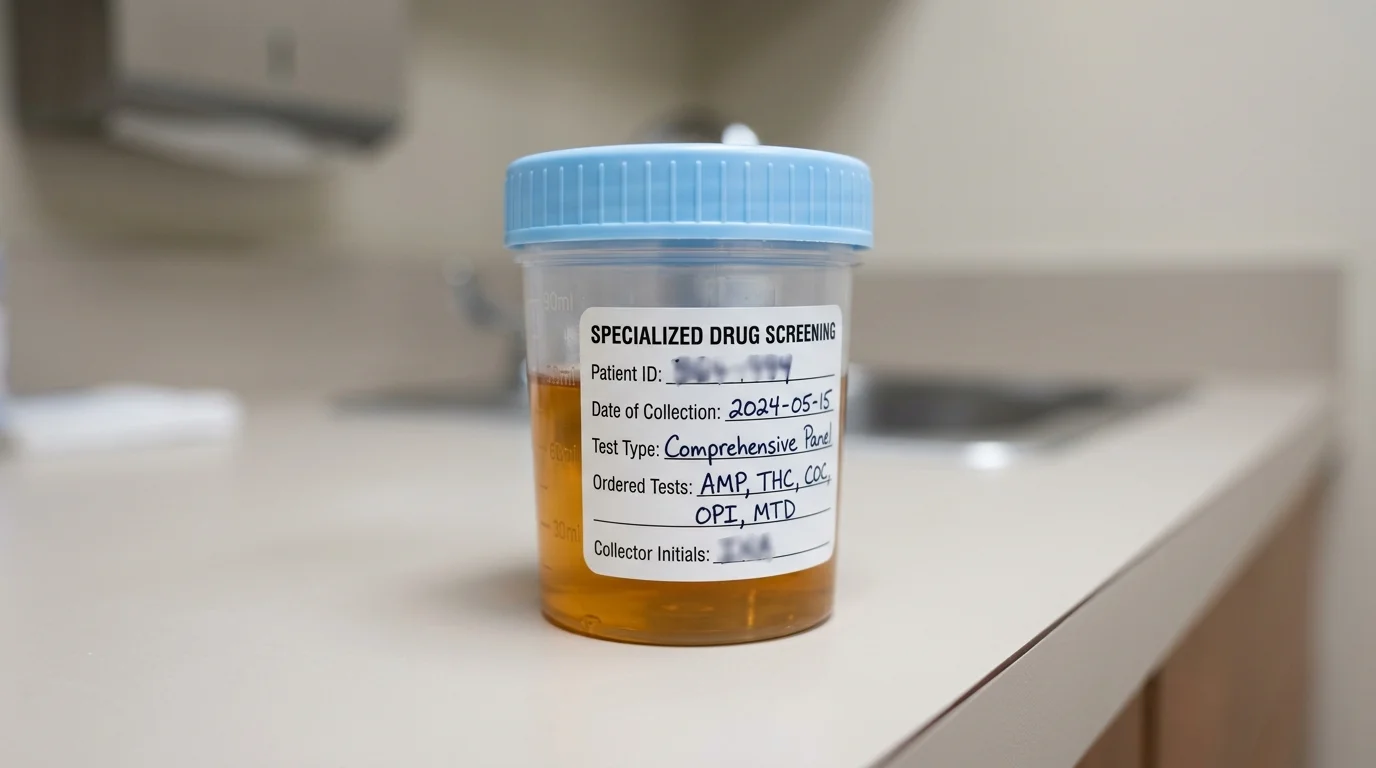
Standard drug screens, including the basic five-panel tests used by many employers, do not typically test for kratom, since mitragynine isn’t included in routine opiate panels. However, specialized tests exist that can detect kratom specifically, and some labs now offer them given rising concern.
How Long Does Kratom Stay in Your System (Urine)?
Kratom’s compounds can show up in urine for roughly 1 to 9 days after use, depending on dose, frequency of use, metabolism, and hydration. Mitragynine has a half-life of around 3 to 9 hours, meaning it takes several half-lives, generally a few days, for it to clear your system in a one-time user, and longer in daily users whose bodies have built up a reserve.
| Test Type | Detects Kratom? |
|---|---|
| Standard 5-panel urine test | No |
| Standard 10-panel urine test | Usually no |
| Specialized kratom/mitragynine panel | Yes |
| Hair follicle test (specialized) | Yes, longer window |
Does kratom show up as an opiate on a standard opiate test? Generally no, because mitragynine’s molecular structure differs enough from morphine-based opiates that routine immunoassay tests won’t flag it. Can kratom give you a false positive? It’s uncommon on standard panels, but cross-reactivity has been reported in some cases, so if you’re being tested for employment or legal reasons and have used kratom, it’s worth mentioning to the testing lab directly. How long does 7-OH stay in your system? Because 7-OH is more potent and sometimes used in higher concentrations, clearance timeframes can run similar to or slightly longer than standard kratom, though individual factors vary considerably.
Is Kratom Legal in Florida?

Kratom is legal to purchase and use in Florida for adults, though the state regulates its sale under the Kratom Consumer Protection Act, which restricts sales to minors and sets some labeling and contamination standards. Florida has not enacted a full ban, unlike several other states and some individual counties nationwide. Several states, including Alabama, Arkansas, Indiana, Rhode Island, Vermont, and Wisconsin, have banned kratom outright, and the conversation around further restriction continues at both the state and federal level.
The American Kratom Association, an industry advocacy group, has pushed back against bans and lobbied for regulation instead of prohibition. Meanwhile, the FDA has not approved kratom for any medical use and has issued repeated warnings about its risks, including links to liver damage and overdose deaths, particularly when combined with other substances.
Kratom Ban: What’s Actually Happening
Legislative attention toward kratom has intensified, largely driven by the rise of concentrated 7-OH products rather than traditional leaf kratom. Some states that once left kratom unregulated are now considering restrictions specifically targeting high-potency extracts. If you’re following the news on this, expect the legal market to keep shifting over the next couple of years as more data on kratom-related deaths comes in.
How Turning Point of Tampa Approaches Kratom Dependence
Kratom dependence doesn’t always get taken seriously, by employers, by family members, or even sometimes by the person using it, because it’s legal and sold like a supplement. We don’t make that mistake. Our medical staff evaluate kratom use the same way we’d evaluate any opioid-receptor-active substance: with a full assessment of dose, frequency, co-occurring mental health concerns, and any other substances involved.
Our continuum of care, from medically monitored detox through residential treatment, day treatment, and intensive outpatient programming, means a client who starts in withdrawal management can step down through each level on the same Tampa campus without starting over with a new team. That continuity matters, particularly for a substance like kratom where withdrawal and cravings can linger longer than people expect.
We’ve treated kratom dependence that stood alone and kratom dependence tangled up with opioid use, alcohol use, or untreated mental health conditions. Group counseling, which we consider the clinical keystone of treatment here, gives clients a chance to hear from others working through the same quiet, often misunderstood struggle. And because we’re family-owned, we offer free weekly family support groups open to the families of current and former clients, because kratom dependence rarely affects just one person in a household.
Supporting Articles
- Opioid (Painkiller) Addiction: Learn how opioid dependence develops and how it’s treated, directly relevant to kratom’s opioid-receptor activity.
- Drug and Alcohol Detox Program at Turning Point of Tampa: Details on our medically monitored detox program, including withdrawal management for opioid-like substances.
- Sedative / Hypnotic / Depressant Addiction: Important reading if you’re combining kratom with other depressants or sedatives.
- Dual Diagnosis: For clients using kratom to self-manage anxiety, pain, or mood symptoms without a formal diagnosis.
- Intensive Outpatient Program Tour: A flexible step-down option for continued support after detox or residential treatment.
Frequently Asked Questions
No, not on standard opiate panels, since mitragynine’s structure differs enough from traditional opiates to avoid detection. Specialized tests designed specifically for kratom can detect it, so it’s not invisible across the board.
Kratom is legal federally and in most states, including Florida, though several states and some counties have banned it outright. The FDA has not approved it for any medical use and continues to flag safety concerns.
Effects typically begin within 10 to 15 minutes and last roughly 2 to 5 hours, depending on dose, strain, and individual metabolism. Higher doses tend to produce longer, more sedating effects.
Kratom is sometimes called “thang,” “kakuam,” “thom,” “ketum,” or “biak” in various regions, though in the U.S. it’s most often sold and referred to simply as kratom. Brand names on commercial products vary widely and don’t always disclose dosage clearly.
Kratom isn’t classified as a narcotic under federal law, but it acts on opioid receptors much like narcotics do. That gap between its legal classification and its pharmacological effect is exactly why so many people underestimate it.
There’s no strong clinical evidence that kratom accelerates aging directly, but chronic heavy use is associated with liver strain, poor sleep, and nutritional neglect, all of which can take a visible toll over time.
On a standard five- or ten-panel test, no. If your employer or a legal proceeding uses a specialized panel that tests for mitragynine specifically, it can be detected for several days after use.
Kratom’s legal status doesn’t make it harmless, and its reputation as a “natural supplement” has led plenty of people into dependence they never saw coming. If kratom use has taken hold of your daily routine, or you’re watching someone you care about struggle to stop, our team at Turning Point of Tampa is ready to talk through what treatment could look like for your specific situation. Reach out to our Tampa campus today to start that conversation.