
“Nodding off” on fentanyl — commonly called the fentanyl nod — refers to a state of involuntary, cyclical semi-consciousness caused by the drug’s powerful sedative effect on the central nervous system. It’s distinct from ordinary drowsiness: the person drifts in and out of awareness, often mid-sentence or mid-movement, because fentanyl suppresses the brain’s respiratory and arousal centers so profoundly that the body can’t stay awake.
If you’ve ever watched someone seem to fall asleep standing up, their head dipping forward and snapping back, only to insist they weren’t sleeping — that’s what the opioid nod looks like in real life. It’s jarring to witness. And it should be, because what appears to be drowsiness is often the body teetering on the edge of something far more dangerous.
At Turning Point of Tampa, our clinical team has spent nearly four decades treating opioid use disorder — including fentanyl addiction — from our single-campus facility in Tampa, Florida. As a Joint Commission accredited, ASAM-certified treatment center (Level 3.5 and 3.7), we’re equipped to guide people through every stage of fentanyl recovery, from medically supervised detox through long-term aftercare. We know what the fentanyl nod means clinically, and we know what it means for families watching someone they love disappear in real time.

What Is the Fentanyl Nod, Exactly?
Fentanyl is 50 to 100 times more potent than morphine. That number alone should stop you cold. When someone uses fentanyl — whether prescribed or obtained on the street, where it now contaminates nearly every illicit drug supply — the drug binds to opioid receptors in the brain with extreme speed and intensity.
The result is a flood of dopamine and a dramatic slowdown of the central nervous system. The person feels a wave of euphoria, then heaviness, then the kind of sedation that the body can’t fight off. That’s the nod. It isn’t sleep. It’s the nervous system losing the battle to stay conscious.
What Nodding Off on Drugs Actually Looks Like
When someone is experiencing the fentanyl nod, you might notice:
- Head drooping forward, then jerking back upright
- Eyes closing mid-conversation, then reopening with glazed or “pinned” (extremely small) pupils
- Slurred or trailing-off speech
- Loss of muscle tone — arms dropping, body slumping
- Momentary unresponsiveness to questions or surroundings
- Cigarette burns on fingers or clothing (a tragic but common physical sign)
The person may insist they’re fine. They’re not fine. The brain is functioning below the level needed to maintain basic awareness — and that same suppression is affecting the drive to breathe.
The Line Between Nodding and Overdose
This is where people get it dangerously wrong. The fentanyl nod and an overdose exist on a continuum, not in separate categories. What begins as nodding off can slide into respiratory depression — slowed, shallow, or stopped breathing — within minutes, especially when:
- The dose was higher than expected (common with illicit fentanyl, which is inconsistently mixed)
- The person also consumed alcohol, benzodiazepines, or other central nervous system depressants
- The person has built a tolerance and used more than usual
- The substance was actually a fentanyl analog, which can be even more potent
If you can’t rouse someone who appears to be nodding, treat it as an overdose. Call 911. Use naloxone (Narcan) immediately if it’s available. Every second matters.
Why Fentanyl Makes Nodding So Much More Dangerous Than Other Opioids
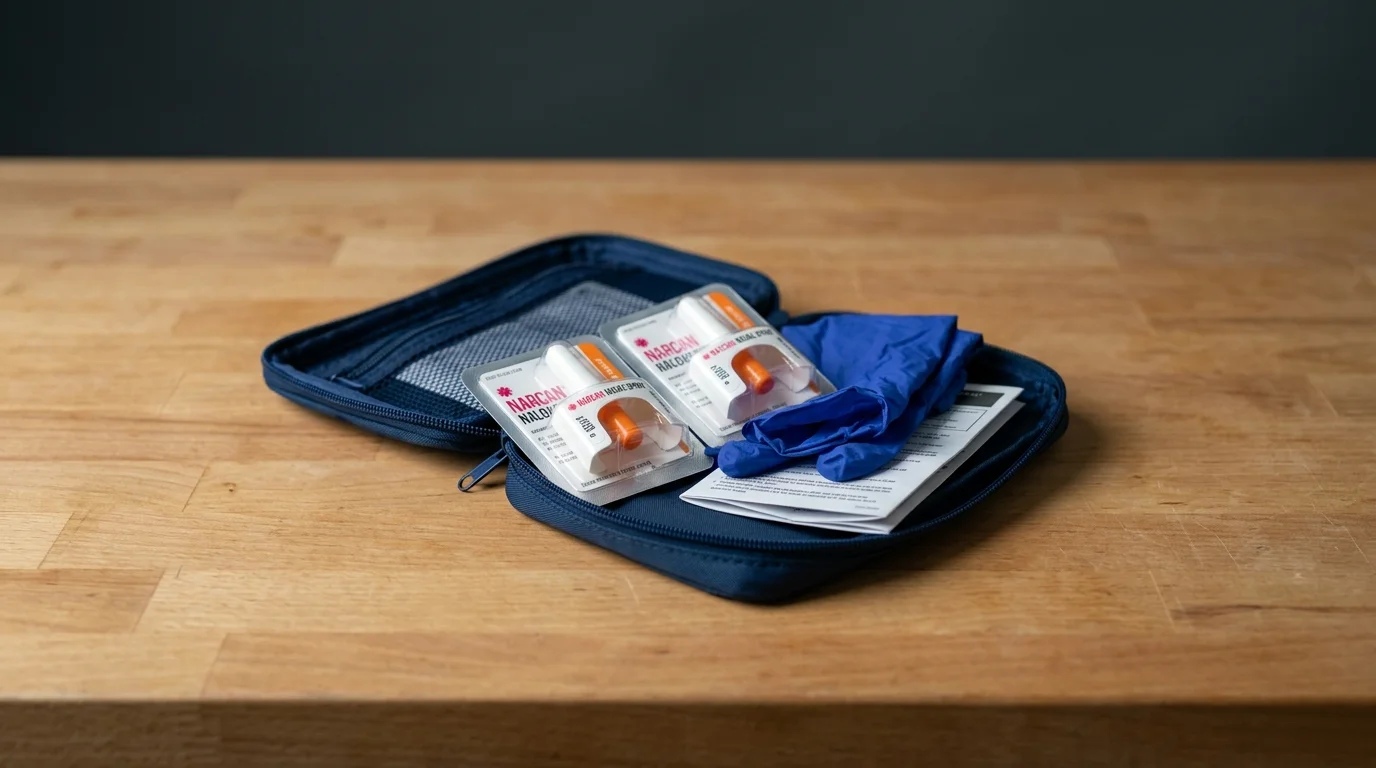
The opioid nod isn’t new. Heroin, oxycodone, and other opioids have caused it for decades. But fentanyl has changed the stakes entirely — and not in a way that’s easy to overstate.
| Factor | Traditional Opioids | Fentanyl |
|---|---|---|
| Potency compared to morphine | 2–10x | 50–100x |
| Onset of sedation | 15–30 minutes | 1–5 minutes |
| Margin between nod and overdose | Wider | Very narrow |
| Illicit supply contamination | Less common | Near-universal (2024–2026) |
| Naloxone doses often needed | 1 | 2 or more |
That narrow margin between sedation and overdose is what makes fentanyl nodding off so terrifying. A person can transition from appearing to “just be sleepy” to full respiratory arrest faster than someone in the room can recognize what’s happening.
And because illicit fentanyl is now found in counterfeit pills, cocaine, methamphetamine, and even pressed MDMA — someone who isn’t trying to use an opioid at all can experience the fentanyl nod. They may not even know what hit them.
Client Spotlight
Carmen had been watching her son nod off at the dinner table for months before she finally called us. She’d been telling herself it was exhaustion from work. When she reached out to Turning Point of Tampa, she described the scene: his head dropping forward over his plate, eyes half-open, a fork still in his hand. She didn’t know it was fentanyl until our admissions team asked the right questions. Within 48 hours of that first call, her son was in our medically supervised detox program. Six months later, he was working the steps in our aftercare group — and Carmen was attending our free weekly family support group, finally understanding what she’d been seeing for years and why it wasn’t her fault she didn’t recognize it sooner.
The Physical Danger Beyond the Nod Itself
Nodding off on drugs isn’t just a red flag for overdose. The physical consequences of chronic fentanyl sedation compound over time in ways that affect every system in the body.
- Aspiration risk: Someone who nods off while eating or drinking can inhale food or liquid, leading to aspiration pneumonia — a serious and sometimes fatal lung infection.
- Injury from falls: Losing muscle control mid-movement causes falls, burns, and head injuries that often go untreated.
- Cardiovascular strain: Repeated cycles of oxygen deprivation stress the heart.
- Brain hypoxia: Even brief periods of reduced oxygen during the nod can contribute to cognitive impairment over time.
- Immune suppression: The chronic stress of opioid use disorder undermines the body’s defenses.
People who are nodding off regularly are not just struggling with addiction — they’re in a medical emergency that unfolds in slow motion. That’s why the first step in real treatment is medically supervised detox, not willpower.
What Happens in the Body During Fentanyl Withdrawal
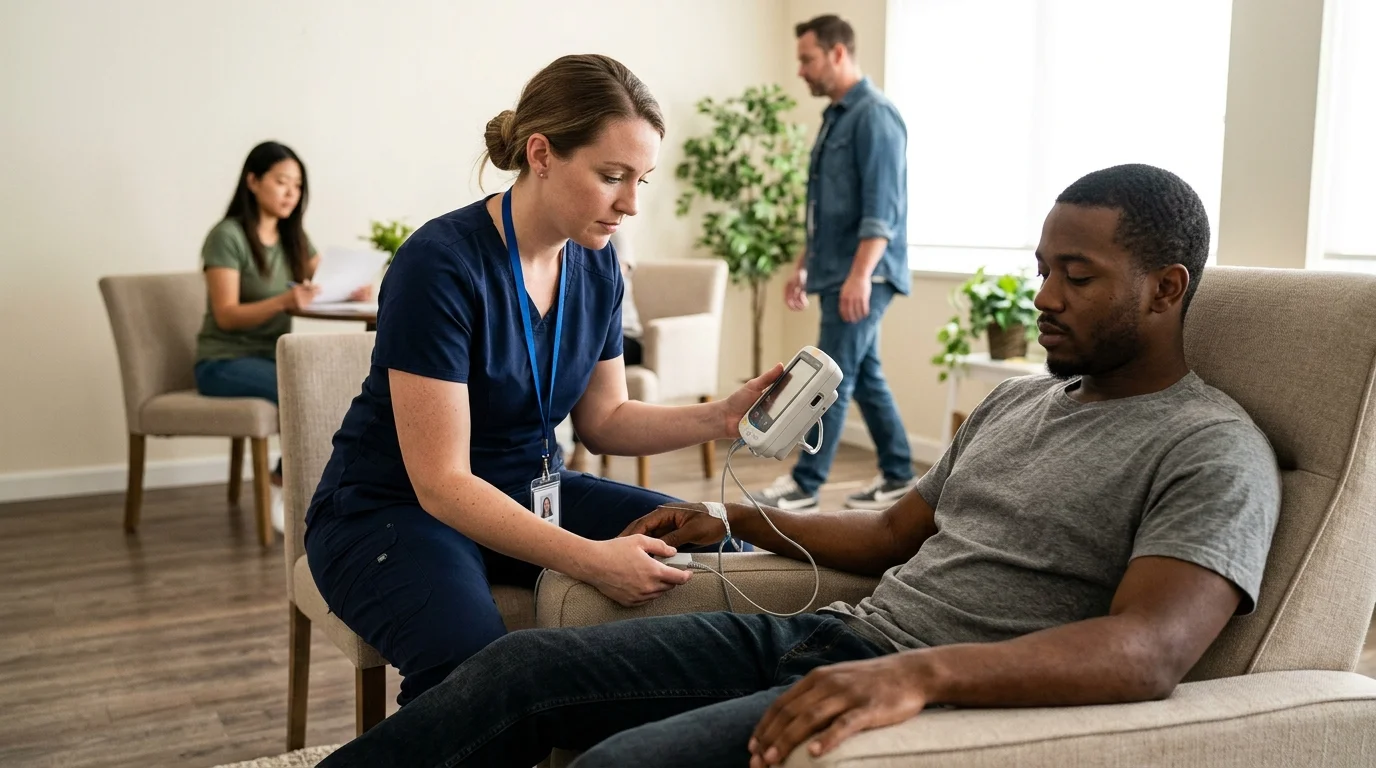
When someone dependent on fentanyl tries to stop — or when the drug wears off — the body swings hard in the opposite direction. What caused sedation now produces hyperarousal: the nervous system, which was suppressed, overcompensates with intensity.
Fentanyl withdrawal symptoms typically begin 8–24 hours after the last dose and can include:
- Intense anxiety and restlessness
- Muscle cramps and bone pain
- Nausea, vomiting, and diarrhea
- Goosebumps and cold sweats (the origin of “cold turkey”)
- Rapid heart rate and elevated blood pressure
- Severe insomnia
- Overwhelming drug cravings
Withdrawal from fentanyl isn’t typically fatal in otherwise healthy adults — but it’s agonizing, and attempting it without medical support dramatically increases the risk of relapse. And relapse after a period of abstinence is when overdoses most often occur, because the person’s tolerance has dropped but their craving hasn’t.
This is why medical detox isn’t optional. It’s the foundation.
Client Spotlight
Marcus had been told he “just needed willpower” more times than he could count. He’d tried to detox from fentanyl on his own three times — alone in his apartment, white-knuckling through the worst of it — and relapsed each time within two weeks. When he came to Turning Point of Tampa, it was the first time anyone had managed the physical process for him while also asking what had started the use in the first place. His treatment team identified a co-occurring anxiety disorder that had been driving his use for years. Treating both — not just one — was what finally gave him a foundation that held.
How Turning Point of Tampa Approaches Fentanyl Addiction Treatment
What makes fentanyl addiction different from other opioid use disorders — in terms of severity, physiological dependence, and the complexity of withdrawal — is something our clinical team addresses from the first hour of a client’s arrival.
Our approach is built on a complete continuum of care, all on one campus. That matters more than it might seem. When you don’t have to transfer between facilities, you don’t lose the relationships you’ve built with your care team. You don’t restart the clinical process at a new location. You move through each level of care — from medical detox through residential treatment, PHP, IOP, and aftercare — with consistency and continuity.
The clinical team is led by board-certified physicians with specialized training in addiction medicine and withdrawal management. Our ASAM Level 3.7 certification reflects a rigorous standard of medically supervised detox that goes well beyond what most outpatient programs can offer. And our evidence-based therapies — including CBT, DBT, and Accelerated Resolution Therapy — are combined with 12-Step principles that give people a daily framework to carry into the rest of their lives.
We’re in-network with most major insurance. Our doors are open 24 hours a day, 7 days a week for admissions. And every client who leaves our campus has access to free, therapist-facilitated aftercare groups for as long as they need — not just 90 days. That’s not a policy. That’s a commitment.
Supporting Articles
- Everything You Need to Know About Opioid Detox — A detailed look at what medically supervised opioid detox involves, what to expect during withdrawal, and how the process lays the foundation for lasting recovery.
- Fentanyl and Benzodiazepines — Explains why combining fentanyl with benzodiazepines is extraordinarily dangerous and how this combination dramatically increases overdose risk — critical reading for anyone managing a loved one’s substance use.
- Mental Health and Dual Diagnosis Treatment in Tampa — Explores how co-occurring conditions like anxiety, depression, and PTSD often drive opioid use — and why treating both simultaneously produces better outcomes.
- Detox Centers in Tampa — A practical resource for understanding what to look for in a detox program and how to evaluate your options in the Tampa Bay area.
- Inpatient Vs. Outpatient Rehab in Tampa — Breaks down the key differences between residential and outpatient levels of care so you can make an informed decision about the right starting point for fentanyl treatment.
Frequently Asked Questions
What Is a Fentanyl Nod?
A fentanyl nod is the involuntary, cyclical drowsiness caused by fentanyl’s powerful sedative effect on the central nervous system. The person drifts in and out of consciousness — often mid-sentence or mid-movement — because the drug suppresses the brain’s arousal and respiratory centers. It looks like falling asleep, but it’s a sign of serious intoxication.
Is Nodding Off on Fentanyl the Same as Overdosing?
Not exactly — but they exist on the same dangerous continuum. Nodding off indicates a level of sedation that can progress to respiratory depression (slowed or stopped breathing) very quickly, especially if additional substances are involved or the dose was unexpectedly high. If someone can’t be roused from a nod, treat it as an overdose: call 911 and administer naloxone immediately.
Why Is the Fentanyl Nod More Dangerous Than the Opioid Nod From Other Drugs?
Fentanyl is 50 to 100 times more potent than morphine, and its margin between sedation and overdose is extremely narrow. With traditional opioids, there’s more physiological “warning space” between intoxication and respiratory arrest. With fentanyl, that space can disappear in minutes — especially because illicit fentanyl is often inconsistently dosed and now contaminates nearly every street drug supply.
Can Someone Nod Off From Fentanyl Without Knowing They Took It?
Yes. Because illicit fentanyl is now found in counterfeit pills, cocaine, methamphetamine, and other substances, people frequently experience opioid effects — including nodding — without knowingly using an opioid at all. This is one of the reasons the current overdose crisis is so widespread: fentanyl exposure isn’t limited to people using opioids intentionally.
What Should I Do If I See Someone Nodding Off on Drugs?
Try to rouse them by calling their name or touching their shoulder firmly. Check that they’re breathing. If you can’t wake them or their breathing is slow and shallow, call 911 immediately and administer naloxone if available. Don’t leave them alone, and don’t let them sleep it off unmonitored — the nod can progress to overdose at any time.
How Do You Treat Fentanyl Addiction After Detox?
Medically supervised detox is the essential first step, but it’s not treatment on its own. After detox, effective fentanyl addiction treatment includes residential programming, structured group and individual therapy, dual diagnosis care for co-occurring mental health conditions, and long-term aftercare support. The most effective outcomes come from completing the full continuum of care — not stopping at detox.
Does Turning Point of Tampa Treat Fentanyl Addiction?
Yes. Turning Point of Tampa offers ASAM-certified medically supervised detox (Level 3.7), residential treatment, PHP, IOP, and long-term aftercare — all on one Tampa campus. We’re in-network with most major insurance carriers and available 24/7 for admissions. Reach out today to speak with our team about treatment options for yourself or a loved one.