
You’ve suspected it for years. Maybe it was the unfinished projects, the racing thoughts at 2 a.m., or the way focus seems to evaporate the moment something feels boring. Or maybe you’re the parent of an adult child who was diagnosed as a kid, stopped taking medication at eighteen, and started drinking or using instead. ADHD doesn’t always look like a fidgety eight-year-old who can’t sit still. In adults, it’s quieter, messier, and far more tangled up with substance use than people realize.
ADHD, or attention-deficit/hyperactivity disorder, is a neurodevelopmental condition marked by persistent patterns of inattention, hyperactivity, and impulsivity that interfere with daily functioning. It’s treated through a combination of medication, therapy, and behavioral strategies, and when it coexists with addiction, both conditions need to be addressed together for lasting results.
Our clinical team at Turning Point of Tampa treats dual diagnosis as one of our three core specializations, alongside addiction and eating disorders, because undiagnosed ADHD shows up constantly in the histories of clients who arrive for substance use treatment. We’re a family-owned, Joint Commission accredited facility that has operated from a single Tampa campus since 1987. Our psychiatric and addiction medicine team evaluates clients for ADHD and other conditions as part of a full dual diagnosis assessment, then builds a treatment plan that treats both the attention disorder and the substance use as connected parts of the same picture. That integration happens on our campus in Tampa, Florida.
What Is ADHD? (Adhd Meaning)

ADHD stands for attention-deficit/hyperactivity disorder, a condition rooted in how the brain regulates attention, impulse control, and activity level. It’s a medical condition rooted in brain function.
Think of it less as a deficit of attention and more as a dysregulation of it. People with ADHD can hyperfocus for hours on something that interests them, then struggle to answer an email for a week. That inconsistency is part of what makes ADHD so often misunderstood, including by the person living with it.
ADHD is classified into three presentations:
- Predominantly inattentive (ADHD-PI): difficulty sustaining focus, following through on tasks, organizing, and remembering details. Less outwardly disruptive, often missed.
- Predominantly hyperactive-impulsive: restlessness, interrupting, difficulty waiting, acting before thinking.
- Combined type: features of both inattentive and hyperactive-impulsive presentations.
Adhd-Pi and the Other Types (Types Adhd)
ADHD-PI, the predominantly inattentive type, is the presentation most likely to go undiagnosed for years. Without the hyperactivity that draws adult attention in childhood, someone with inattentive ADHD often gets labeled as “spacey,” “lazy,” or “unmotivated” instead of evaluated. That mislabeling matters. It shapes how a person sees themselves long before anyone considers an actual exam.
Here’s a quick comparison of how the three presentations typically show up:
| Presentation | Core Features | How It’s Often Mistaken |
|---|---|---|
| Predominantly Inattentive (ADHD-PI) | Trouble focusing, losing track of tasks, forgetfulness | Laziness, lack of motivation, daydreaming |
| Predominantly Hyperactive-Impulsive | Restlessness, interrupting, impulsive decisions | Rudeness, poor discipline, “too much energy” |
| Combined Type | Both inattentive and hyperactive-impulsive symptoms | Anxiety, personality issues, or general disorganization |
Why does this distinction matter for your treatment? Inattentive ADHD often gets missed entirely until adulthood, usually after years of self-doubt, or self-medication.
Adhd Adult Symptoms: What Changes After Childhood
Adult ADHD symptoms often look different from the stereotype of a hyperactive child. In adults, hyperactivity tends to turn inward, becoming restlessness, racing thoughts, or constant mental noise rather than visible fidgeting.
Common adhd adult symptoms include:
- Chronic disorganization and lost items (keys, paperwork, appointments)
- Difficulty starting tasks, even urgent ones, until the last possible moment
- Trouble regulating emotions, including quick frustration or irritability
- Restlessness or an inner sense of unease, even when sitting still
- Forgetfulness around commitments, deadlines, or conversations
- Impulsive spending, relationship decisions, or substance use
- A pattern of unfinished projects, jobs, or goals
Sound familiar? Many adults don’t connect these patterns to ADHD until a crisis, whether that’s a job loss, a DUI, or a loved one finally asking “have you ever been checked for this?”
Female Adhd Symptoms: Why Women Get Missed
ADHD in women and girls is underdiagnosed compared to ADHD in men, largely because female symptoms tend to present less visibly. A woman with ADHD is more likely to internalize her struggle: anxiety, perfectionism, and quiet overwhelm rather than outward disruption.
Female ADHD symptoms often include:
- Intense self-criticism over “simple” tasks that feel hard
- Chronic overwhelm managing work, home, and relationships at once
- Masking symptoms in public, then crashing at home
- Emotional sensitivity, including strong reactions to perceived rejection (more on this below)
- A long history of being told she’s “too sensitive” or “a perfectionist” rather than being evaluated
A woman with ADHD frequently reaches adulthood with an entirely different self-concept than a man with the same condition, often one built around shame rather than understanding. That gap in recognition is part of why so many women aren’t diagnosed until their thirties or forties, sometimes only after a child’s own diagnosis prompts the question, “wait, does this sound like me too?”
Add and Adhd Testing: How Diagnosis Actually Works
ADHD testing (sometimes still called “ADD testing,” using the older terminology) involves clinical interviews, standardized rating scales, and a review of symptom history going back to childhood. Diagnosis relies on a trained clinician’s evaluation, since there’s no single blood test or brain scan that confirms ADHD.
A typical adhd evaluation includes:
- Clinical interview covering developmental history, since ADHD symptoms must be present before age 12
- Standardized rating scales, such as the ASRS (Adult ADHD Self-Report Scale), used to screen for and quantify symptom severity.
- Collateral information from a parent, partner, or old school records when available, since self-report alone can be incomplete.
- Rule-out assessment for conditions that mimic ADHD, including anxiety, depression, trauma, thyroid issues, and substance use itself.
- Diagnostic formulation, where a psychiatrist or psychologist determines whether criteria are met and which presentation applies.
Does anxiety make ADHD worse? It can. Anxiety and ADHD frequently overlap, and anxious hypervigilance can mimic or boost attention difficulties, which is exactly why a proper evaluation needs to rule out overlapping conditions rather than assume ADHD is the whole story.
Symptoms for ADHD vs. Other Conditions
A good diagnostician asks what else could explain this. Is socially awkward behavior a sign of ADHD? Sometimes, since impulsivity and missed social cues can create friction in conversation. Social struggles alone could point toward autism, anxiety, or something else entirely rather than confirming ADHD. Is PDA (pathological demand avoidance) autism or ADHD? PDA is most often discussed as a profile within autism, though the two conditions can and do co-occur, which is part of why differential diagnosis matters so much.
This is also where genetics come into the conversation. Which gene causes ADHD? There isn’t one single gene. ADHD is considered highly heritable, with research pointing to multiple genes involved in dopamine regulation, though no single genetic marker determines a diagnosis on its own.
ADHD Meds: What Treatment Actually Looks Like
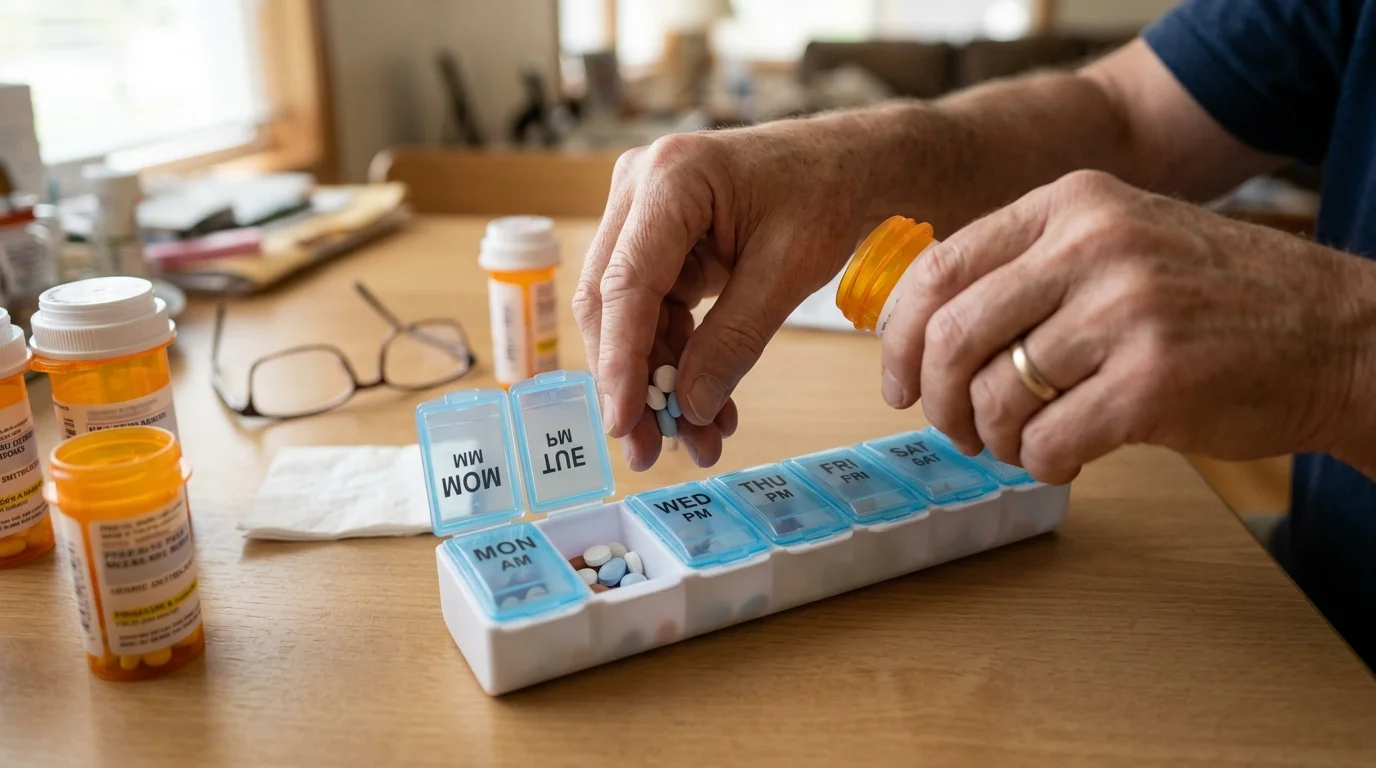
ADHD medication falls into two main categories: stimulants and non-stimulants, and the right choice depends on your symptoms, history, and whether substance use is part of the picture. Stimulants such as methylphenidate and amphetamine-based medications are the most established and widely used ADHD treatments, while non-stimulant options offer an alternative for people with a substance use history or stimulant sensitivity.
| Medication Type | Examples (Class) | Best Fit |
|---|---|---|
| Stimulants | Methylphenidate-based, amphetamine-based | First-line treatment for many; faster onset |
| Non-stimulants | Atomoxetine-type, certain blood pressure-adjacent agents, newer non-stimulant options | Clients with addiction history, stimulant sensitivity, or co-occurring anxiety |
Do you need ADHD medication? Not everyone does. Medication is a tool that helps many people manage ADHD successfully alongside therapy, structure, and lifestyle changes, and for others, medication makes those strategies far more achievable.
For clients with a current or past substance use disorder, prescribing stimulant medication requires real caution. This is where working with an addiction-informed psychiatric provider matters most. Our medical team at Turning Point of Tampa evaluates each client’s full history before making medication recommendations, often favoring non-stimulant options or closely monitored protocols when a stimulant use disorder is part of someone’s story.
Client Spotlight
Renee had been prescribed a stimulant for ADHD in college and found, years later, that she was taking far more than prescribed just to get through a workday. By the time she reached out to our team, she’d already tried quitting cold turkey twice, only to feel so unfocused and overwhelmed that she went back to the medication within days. Our psychiatric team worked with her to transition to a non-stimulant option alongside therapy for the underlying ADHD, and she completed our day treatment program before stepping down to outpatient care. She still checks in with our free weekly aftercare group, and she’s quick to tell newer clients that treating the disorder underneath the medication is what matters most.
Therapist for ADHD: What Therapy Adds

A therapist trained in ADHD helps you build the skills that medication alone can’t provide, like organization systems, emotional regulation tools, and strategies for the shame that often accumulates after years of missed deadlines and misunderstood behavior. Cognitive behavioral therapy (CBT) is one of the most studied approaches for ADHD, helping clients identify the specific thought patterns that turn a forgotten task into a spiral of self-blame.
What’s the 20 minute rule for ADHD? It’s a practical trick some therapists teach: commit to just 20 minutes on a dreaded task, with permission to stop afterward. The goal is breaking the inertia that keeps a task from ever starting.
Can you control ADHD without medication? Many people reduce symptom impact significantly through structured routines, consistent sleep, regular movement, body-doubling (working alongside another person), and therapy, even if full symptom elimination isn’t realistic without medication for everyone.
What vitamins help with ADHD? Some research points to zinc, iron, magnesium, and omega-3 fatty acids as having a modest supportive role, particularly for people with documented deficiencies, though supplements aren’t a replacement for evidence-based treatment. Talk with a physician before starting anything new, especially if you’re also managing addiction recovery.
Treat ADHD and Addiction Together: Why It Has To Be Both
Treating ADHD and addiction separately rarely works, because the untreated ADHD symptoms (impulsivity, difficulty with follow-through, emotional dysregulation) keep feeding the substance use cycle. Dual diagnosis treatment addresses both conditions in the same setting, with the same clinical team, so neither one gets lost.
Why does self-medication happen so often with ADHD? Stimulant drugs and alcohol both temporarily quiet the restlessness and mental noise that untreated ADHD creates, which makes the connection between the two conditions almost mechanical rather than coincidental. Someone with undiagnosed inattentive ADHD might find that cocaine or methamphetamine briefly makes them feel “normal,” focused, capable, for the first time in years. Someone with the hyperactive-impulsive presentation might use alcohol or sedatives to slow down a mind that never stops.
What are people with ADHD usually good at? Creativity, crisis response, pattern recognition, and hyperfocus on subjects they care about are frequently cited strengths, and treatment should build on those strengths while recognizing ADHD’s challenges too.
What is ADHD fatigue? It’s the exhaustion that comes from the constant mental effort of masking symptoms, managing distraction, and pushing through tasks that take more energy for an ADHD brain than a neurotypical one. It’s real, and it’s often mistaken for laziness or depression.
Our dual diagnosis program at Turning Point of Tampa combines psychiatric evaluation, medication management when appropriate, individual therapy, and group counseling, which we consider the clinical keystone of treatment. Clients process their ADHD and their addiction in the same group sessions, because the two were never really separate issues to begin with.
Client Spotlight
Marco’s wife had been the one pushing him toward an evaluation for years, convinced his drinking was tangled up with something more than stress. After an intervention following a second DUI, he agreed to a full assessment at Turning Point of Tampa and was diagnosed with combined-type ADHD he’d carried undiagnosed since childhood. Through our residential and day treatment programs, he learned that his drinking had become his own clumsy attempt to quiet a mind that never stopped racing. His wife now attends our free weekly family support group, and Marco credits the combination of non-stimulant medication and structured routine with giving him the first real quiet he’s felt in years.
What Jobs and Daily Life Can Look Like With ADHD
What jobs are good for people with ADHD? Roles with variety, movement, creative problem-solving, or high stakes tend to suit the ADHD brain well: entrepreneurship, emergency services, sales, teaching, design, and skilled trades are commonly cited fits. Can people with ADHD get disability? In certain cases, when ADHD significantly limits major life activities and meets specific federal criteria, individuals may qualify for disability benefits, though the bar is high and documentation from a qualified evaluator is essential.
Recovery from addiction doesn’t erase ADHD. The goal of treatment is giving you tools, medication when it fits, therapy, and structure, so the disorder stops running your life from the background.
How Turning Point of Tampa Approaches ADHD and Addiction
Family-owned since 1987, our facility has built its reputation on treating the whole clinical picture. When a client arrives struggling with substance use, our intake process looks for what’s underneath it, including ADHD, trauma, depression, or an eating disorder, because treating addiction without addressing what’s driving it rarely holds.
Our campus offers every level of care under one roof: medical detox, residential treatment, day treatment, intensive outpatient, and a virtual IOP option for clients who need flexibility. That continuity means the psychiatric provider who diagnoses your ADHD in residential care is often the same one adjusting your medication months into outpatient treatment. Clients see familiar faces, keep consistent records, and don’t have to repeat their story to a new team every few weeks.
We’re Joint Commission accredited and certified by ASAM at the residential and withdrawal management levels, standards that require ongoing review of our clinical protocols. Our approach blends 12-Step principles with evidence-based therapies like CBT, giving clients both a daily framework for recovery and clinical tools for managing ADHD symptoms long after they leave our campus. And because we’re family-owned, our free weekly family support groups stay open to relatives of current and former clients alike, for as long as they want to keep coming.
Supporting Articles
- Dual Diagnosis: Learn how Turning Point of Tampa treats mental health conditions and substance use together as one connected treatment plan.
- Cognitive Behavioral Therapy (CBT): An overview of how CBT is used in our programs to address thought patterns tied to both addiction and conditions like ADHD.
- Stimulant Addiction: Details on how stimulant misuse develops and how it’s treated, relevant for clients who began using stimulants to manage undiagnosed ADHD.
- Intensive Outpatient Program Tour: Information on our IOP level of care, often the step-down option for clients managing both ADHD and recovery.
- Family Support Group: Details on our free weekly groups for families navigating a loved one’s dual diagnosis treatment.
Frequently Asked Questions
The most effective treatment typically combines medication, behavioral therapy, and structured lifestyle strategies tailored to your specific symptoms. When addiction is also present, both conditions need treatment in the same coordinated plan rather than separately.
Not necessarily. Medication helps many people, but therapy, structure, and skill-building can meaningfully reduce symptoms for others, and the right path depends on your evaluation and goals.
Diagnosis involves a clinical interview, standardized rating scales like the ASRS, and a review of symptoms dating back to childhood, since ADHD criteria require symptoms present before age 12. A trained psychiatrist or psychologist makes the final determination after ruling out other possible causes.
Yes, but it requires careful evaluation by an addiction-informed psychiatric provider. Non-stimulant options or closely monitored protocols are often recommended when a stimulant use disorder is part of someone’s history.
Untreated ADHD symptoms like impulsivity and restlessness often lead people to self-medicate with alcohol or stimulant drugs long before a formal diagnosis. Treating only the addiction without addressing the ADHD underneath it tends to leave the underlying problem unresolved.
ADD was the older clinical term used before the diagnostic criteria were updated; today, the condition is classified as ADHD with specific presentations, including the predominantly inattentive type (ADHD-PI). They refer to the same underlying condition under different naming conventions.
Our program is built around dual diagnosis and addiction treatment, so ADHD is addressed as part of a broader clinical picture, especially when substance use is also present. Reach out to our team to discuss whether our level of care fits your specific situation.