Most people have heard the word “meth.” Fewer have heard of Methadrine — but they’re the same drug. And if you’re searching for answers about Methadrine right now, there’s a good chance someone you care about is involved with it. Or maybe you are. Either way, you deserve a clear, honest answer.
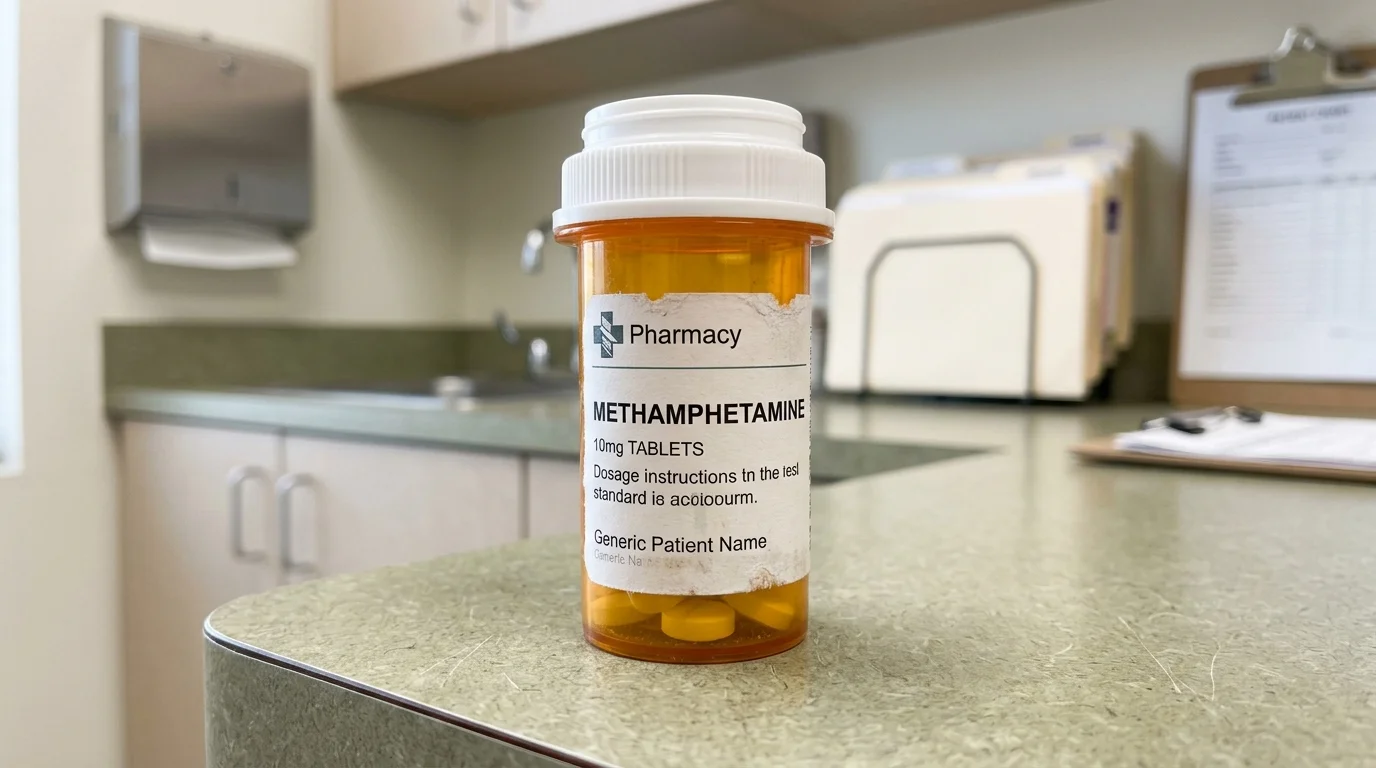
Methadrine (also spelled Methedrine) is a brand name for methamphetamine, a powerful synthetic central nervous system stimulant with a high potential for addiction. While it has limited, FDA-approved medical applications — primarily under the brand name Desoxyn for attention deficit hyperactivity disorder (ADHD) and short-term obesity treatment — it is far more widely known as a dangerous illicit drug referred to as “meth,” “speed,” or “crystal.” Methamphetamine floods the brain with dopamine, producing intense euphoria and energy that the brain quickly comes to depend on.
Turning Point of Tampa has been treating adults struggling with stimulant addiction — including methamphetamine — since 1987 from our single-campus facility in Tampa, Florida. As one of the few treatment centers in Florida offering a complete continuum of care — from medical detox through residential treatment, PHP, IOP, and long-term aftercare — our clinical team is equipped to address the full complexity of meth addiction, including the co-occurring mental health conditions that so often accompany it. We’re family-owned, Joint Commission accredited, and recognized by Newsweek as one of America’s Best Addiction Treatment Centers.
The History Behind the Name
Where did the name Methadrine come from? It was a registered pharmaceutical trademark — one of several brand names used for methamphetamine in the mid-20th century when the drug was legally marketed as a decongestant, weight-loss aid, and treatment for depression and fatigue. At its peak, amphetamine-class drugs were prescribed widely and sold over the counter in some forms.
That era ended. The 1970 Controlled Substances Act reclassified methamphetamine as a Schedule II controlled substance — meaning it has a recognized but limited medical use, and a high potential for abuse. Non-medical use is illegal. The Methadrine brand is no longer in commercial use, but the name has stayed in the cultural vocabulary.
Here’s what matters: whatever name it goes by — Methadrine, Methedrine, Desoxyn, crystal, speed, or crank — the substance is the same. The risks are the same. And the need for treatment is just as real.
What Kind of Drug Is Methadrine?

Methadrine is classified as a Schedule II controlled stimulant. It belongs to the amphetamine family of drugs, meaning it directly stimulates the central nervous system by dramatically increasing the release of dopamine, norepinephrine, and serotonin in the brain. The result is an intense surge of energy, focus, and euphoria — followed by an equally intense crash.
The table below outlines how methamphetamine compares to other stimulants you may have heard of:
| Drug | Classification | Medical Use | Abuse Potential |
|---|---|---|---|
| Methadrine / Methamphetamine | Schedule II stimulant | ADHD (Desoxyn), obesity | Extremely high |
| Adderall (amphetamine salts) | Schedule II stimulant | ADHD, narcolepsy | High |
| Desoxyn (Rx methamphetamine) | Schedule II stimulant | ADHD, weight loss | Extremely high |
| Ritalin / methylphenidate | Schedule II stimulant | ADHD | Moderate to high |
| Cocaine | Schedule II stimulant | Topical anesthetic (rare) | Extremely high |
The key takeaway here: methamphetamine is stronger and longer-lasting than most other stimulants. Its effects can last 8 to 24 hours, compared to cocaine’s 30-90 minutes — which means more sustained stress on the brain and body with each use.
Methadrine vs. Adderall vs. Desoxyn: What’s the Difference?
People often wonder how these drugs compare. It’s a fair question.
Adderall vs. Desoxyn (Methadrine): Adderall contains mixed amphetamine salts and is one of the most commonly prescribed medications for ADHD. Desoxyn is the brand name for pharmaceutical-grade methamphetamine, also prescribed for ADHD but far less frequently. Desoxyn is more potent, carries a higher abuse potential, and is prescribed only when other options haven’t worked. The clinical difference between them is meaningful — and so is the risk profile.
Is methylphenidate basically Adderall? Not exactly. Methylphenidate (Ritalin, Concerta) works by blocking dopamine reuptake rather than triggering additional release, making it mechanistically distinct from amphetamines. It’s generally considered to carry a lower abuse potential than Adderall or methamphetamine, though misuse still occurs.
What is the strongest stimulant for ADHD? Among FDA-approved medications, methamphetamine (Desoxyn) is the most potent — but it’s rarely prescribed for exactly that reason. Most physicians exhaust safer alternatives first.
Bottom line: street methamphetamine bears little resemblance to carefully dosed prescription stimulants. Illicit meth is often cut with fentanyl, levamisole, or other adulterants. The purity is unpredictable. The consequences can be fatal.
Short-Term and Long-Term Effects of Methamphetamine**
What does methamphetamine actually do to the body and brain? Here’s what the science — and nearly four decades of clinical experience — shows us.
Short-Term Effects**
- Intense euphoria and surge of confidence
- Dramatically elevated heart rate and blood pressure
- Decreased appetite
- Increased wakefulness and physical activity
- Hyperthermia (elevated body temperature)
- Erratic or violent behavior
- Paranoia and hallucinations at high doses
Long-Term Effects**
The long-term picture is significantly more damaging. Chronic meth use rewires dopamine pathways, often causing prolonged anhedonia — the inability to feel pleasure — even after stopping. Other long-term consequences include:
- Severe dental decay (“meth mouth”)
- Cognitive impairment and memory loss
- Psychosis that can persist long after the drug leaves the system
- Cardiovascular damage, including risk of stroke and heart attack
- Skin sores from compulsive picking
- Rapid, visible physical deterioration
- Co-occurring anxiety, depression, and paranoia
Client Spotlight
Ray had been using meth for nearly six years before his sister called Turning Point of Tampa at 11 p.m. on a Tuesday. He hadn’t slept in four days. He’d lost 40 pounds. His family could see him disappearing — not slowly anymore, but fast. When he arrived at our Tampa facility, his intake evaluation revealed significant anxiety and depression beneath the substance use, conditions that had been there long before the meth but had never been treated. Over the following weeks, Ray moved through medical detox and into residential care. His dual diagnosis — addiction plus major depressive disorder — was treated as what it was: one connected problem, not two separate ones. “I’d been numbing something I didn’t have a name for,” he said later, in aftercare. “Turning Point gave it a name. That was the beginning.”
Why Methamphetamine Is So Hard to Quit
Here’s the thing — meth addiction isn’t a willpower problem. It’s a brain disease. Methamphetamine floods the brain’s reward system with dopamine at a level that natural experiences simply can’t replicate. Over time, the brain adjusts by producing less dopamine on its own and reducing the number of dopamine receptors. The result? Nothing feels good without the drug.
This is why people who’ve been using meth for extended periods often feel flat, depressed, and incapable of joy during early recovery. That phase — called post-acute withdrawal syndrome (PAWS) — can last weeks to months. It’s one of the most challenging aspects of stimulant recovery, and it’s one of the reasons structured, medically supervised treatment matters so much.
Attempting to quit meth alone rarely works. Not because people don’t want to — but because the brain has been fundamentally altered. Structure, clinical support, and time are what the brain needs to start healing.
Client Spotlight
Morgan had tried to quit three times on her own. Each time, the depression and exhaustion of early withdrawal felt unsurvivable — not because she was weak, but because no one had explained what was actually happening to her brain. She found Turning Point of Tampa after a Google search at two in the morning, called the next day, and was admitted within 48 hours. What made the difference, she said later, wasn’t just detox. It was finally understanding that what she was experiencing had a name, a clinical explanation, and a path through. The dual diagnosis component addressed the anxiety she’d been self-medicating for years. The group sessions reminded her she wasn’t alone. She’s been in our free weekly aftercare groups ever since — and she shows up every week, not because she has to, but because it works.
What Treatment for Meth Addiction Actually Looks Like
Methamphetamine doesn’t have an FDA-approved pharmacological treatment the way opioids do — there’s no “meth equivalent” of Suboxone. That makes behavioral and psychosocial treatment the frontline approach, and it makes the quality of a treatment program critically important.
Effective meth addiction treatment typically includes:
- Medical stabilization and supervised detox — managing withdrawal symptoms, sleep disruption, and co-occurring mental health crises under 24/7 clinical care
- Residential treatment — highly structured inpatient care with daily therapeutic programming, group counseling, and individual therapy
- Dual diagnosis assessment and treatment — identifying and treating the underlying anxiety, depression, trauma, or ADHD that often drives stimulant use
- Cognitive Behavioral Therapy (CBT) — building the thought patterns and coping skills needed to manage cravings and triggers
- 12-Step integration — applying a daily framework of accountability, community, and principle-based living that outlasts treatment
- Step-down programming — transitioning through PHP, IOP, and outpatient levels of care to build independence without losing support
- Long-term aftercare — because recovery from meth is a long game, not a 30-day fix
What people who struggle with meth addiction often need most is structure — consistent, caring, high-accountability structure. That’s not punitive. That’s what healing requires.
What Sets Turning Point of Tampa Apart in Meth Treatment

Not every treatment center is equipped to handle the complexity of methamphetamine addiction. This is especially true when co-occurring mental health conditions — which are extremely common in meth users — are involved.
Our approach at Turning Point of Tampa is built around integration. We don’t treat your addiction in one room and your depression in another. We treat you — the whole person — as a single, connected case. Our triple specialization in addiction, eating disorders, and dual diagnosis means that whatever is underneath the substance use gets addressed alongside it, not after it.
We’re one of the few facilities in Florida licensed for residential treatment, which matters for meth addiction specifically. The early weeks of recovery from methamphetamine often involve significant psychiatric instability — sleep disruption, cognitive fog, emotional volatility. That’s not a crisis. That’s a healing brain. But it requires round-the-clock clinical support, not an outpatient schedule.
Since 1987, we’ve never wavered from our commitment to 12-Step-based, evidence-based care delivered in community. Group counseling is the keystone of our programming — because we’ve seen what happens when people hear their own story in someone else’s voice. Denial softens. Real work begins.
Our free weekly aftercare groups are open for as long as you need them. We’re in-network with most major insurance. And our doors are open 24/7 for admissions — because the moment someone is ready to get help is never a convenient time, and we don’t make people wait.
If you or someone you love is struggling with meth addiction, reach out today. You don’t have to have it figured out. That’s what we’re here for.
Supporting Articles
- Addiction Treatment in Tampa Florida — An overview of the levels of care available at Turning Point of Tampa, including detox, residential, and outpatient options — directly relevant to understanding what meth treatment looks like from intake to aftercare.
- Mental Health and Dual Diagnosis Treatment in Tampa — A deep look at how co-occurring mental health disorders are treated alongside addiction — essential reading for anyone whose meth use is connected to untreated anxiety, depression, or trauma.
- Detox Centers in Tampa — What to expect from medically supervised detox, including how stimulant withdrawal is managed safely — an important first step for anyone ready to stop using methamphetamine.
- How to Choose the Right Rehab in Tampa — A practical guide to evaluating treatment centers, including what questions to ask and what credentials to look for when selecting a facility for meth addiction recovery.
- Everything You Need to Know About Opioid Detox — While focused on opioids, this article covers withdrawal management principles that parallel the meth detox experience and helps families understand the medical detox process.
Frequently Asked Questions
What Kind of Drug Is Methadrine?
Methadrine is a brand name for methamphetamine, a Schedule II controlled stimulant that affects the central nervous system. It dramatically increases dopamine levels in the brain, producing intense euphoria and energy. While it has limited medical uses under the name Desoxyn, it is far more commonly known as a highly addictive illicit drug.
Is Methadrine a Controlled Substance?
Yes. Methamphetamine — the active ingredient in Methadrine — is classified as a Schedule II controlled substance under the Controlled Substances Act. This means it has a recognized but very limited medical use and a high potential for abuse. Non-medical use, possession, or distribution is illegal and carries serious criminal penalties.
What’s the Difference Between Adderall and Desoxyn?
Both are Schedule II stimulants prescribed for ADHD, but Desoxyn contains pharmaceutical methamphetamine and is significantly more potent than Adderall’s mixed amphetamine salts. Desoxyn carries a substantially higher risk of dependence and abuse, which is why it’s rarely prescribed and only when other ADHD medications haven’t been effective.
Is Methylphenidate Basically the Same as Adderall?
No. Methylphenidate (Ritalin, Concerta) works by blocking dopamine reuptake, while amphetamines like Adderall trigger additional dopamine release — making them mechanistically distinct. Methylphenidate is generally considered to carry a somewhat lower abuse potential than amphetamine-based medications, though misuse of either drug still occurs and can lead to dependency.
What Is the Strongest Stimulant Prescribed for ADHD?
Among FDA-approved medications, methamphetamine (Desoxyn) is the most potent. However, it’s rarely prescribed because of its extremely high abuse potential. Most physicians and psychiatrists will try methylphenidate and amphetamine-salt formulations first before considering methamphetamine-based treatment for ADHD.
Can You Recover From Methamphetamine Addiction?
Yes — and thousands of people do every year. Recovery from meth is challenging and often longer than recovery from other substances because of how deeply meth affects dopamine pathways. But with structured, evidence-based treatment that addresses co-occurring conditions, and with sustained support through aftercare, lasting recovery is absolutely achievable.
What Should I Do If Someone I Love Is Using Meth?
Don’t wait for them to hit bottom on their own — that’s a myth that costs lives. Reach out to a treatment center today to understand your options. Many facilities, including Turning Point of Tampa, offer guidance to families and can help you understand the intervention and admissions process. You don’t have to navigate this alone, and neither do they.